

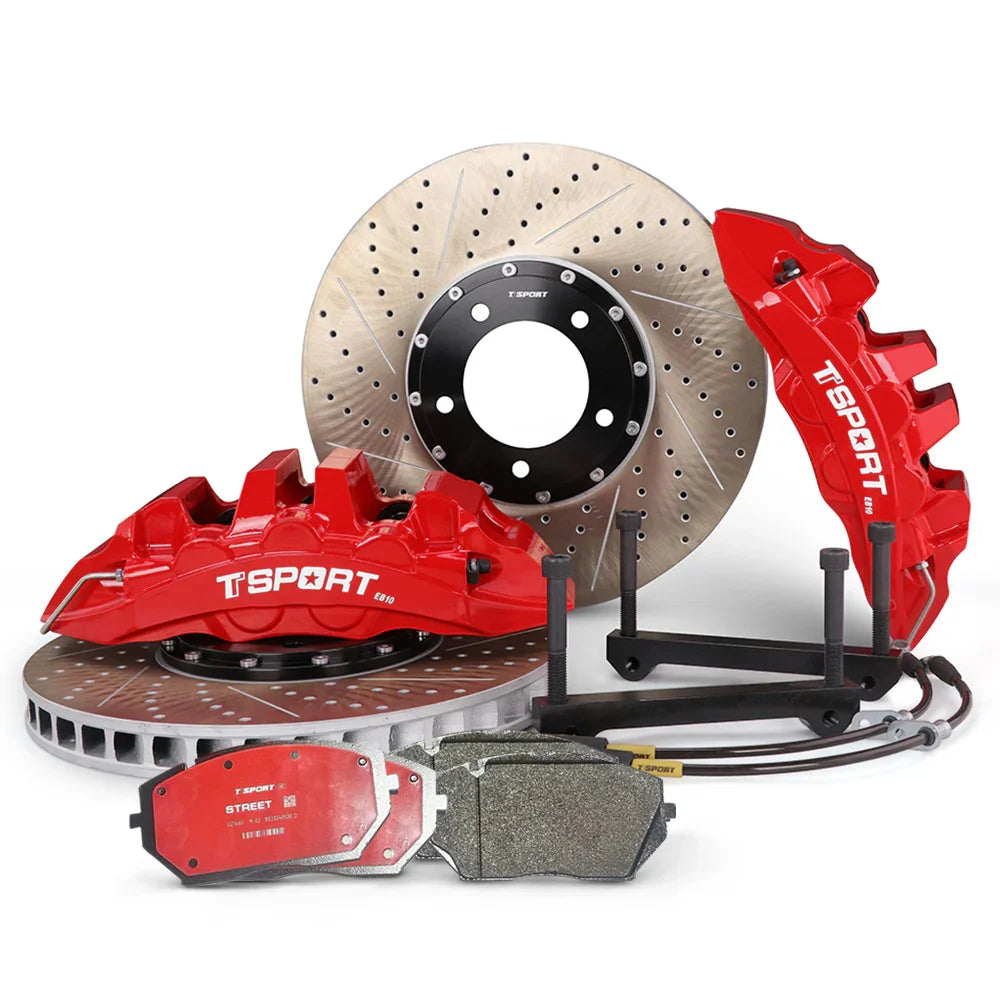
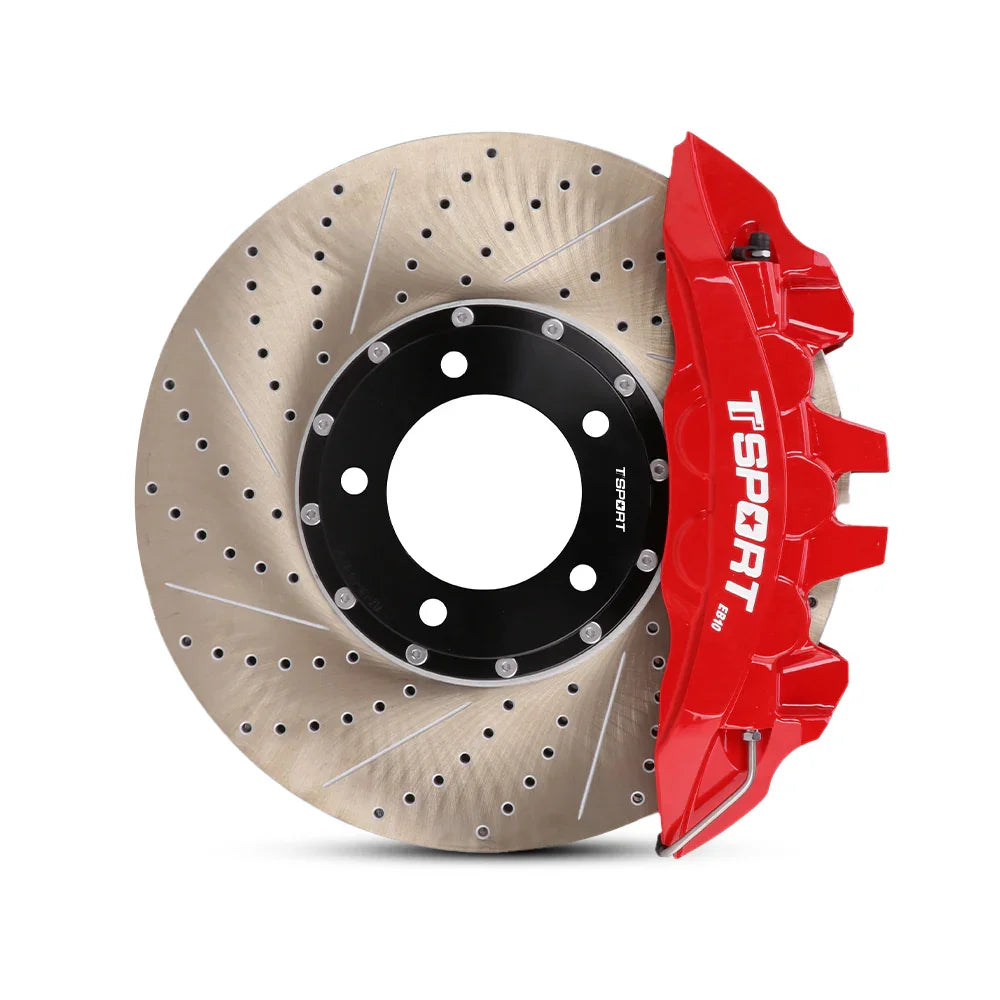
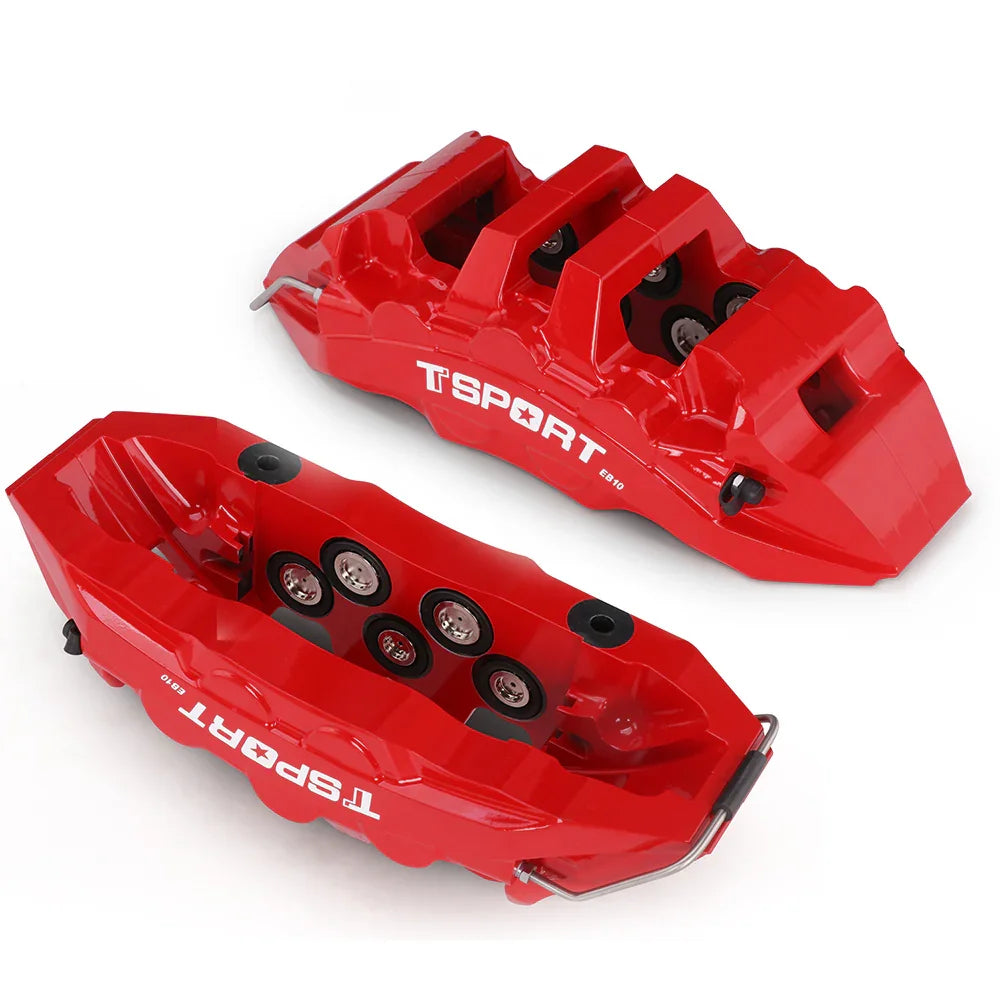
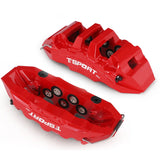
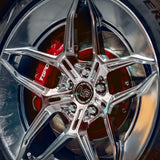


十活塞夾持架構
差異孔徑設計 — 前側 4× 28 mm、後側 6× 30 mm — 讓長版煞車皮上的壓力均勻分布。結果是磨耗平均、咬合可預期,且踏板腳感隨溫度升高仍保持線性。
Evolution 系列 · 前軸 · 平台適配 BBK
EB10 專為需要極高煞車扭力、穩定踏板腳感與可重複散熱表現的前軸應用而打造。兩片式鍛造十活塞卡鉗推動長版煞車皮,搭配 420 或 440 mm 兩片式碟盤,帶來受控的初期咬合、線性控制力道,以及無論在賽道上逐圈奔馳或在街道上反覆煞停,都始終如一的制動信心。
差異孔徑設計 — 前側 4× 28 mm、後側 6× 30 mm — 讓長版煞車皮上的壓力均勻分布。結果是磨耗平均、咬合可預期,且踏板腳感隨溫度升高仍保持線性。
鍛造結構可抵抗高油壓下的卡鉗變形,有助維持踏板行程與控制力。高溫亮面塗層可承受反覆熱循環而不失外觀質感。
兩片式隔熱活塞搭配防塵套,可減少熱能由煞車皮傳導至煞車油,有助於在長時間或反覆重煞時抵抗煞車皮熱衰竭與煞車油沸騰。
Ø420 或 Ø440 mm × 40 mm 內通風碟盤,採用經熱處理的高碳鑄鐵或碳纖維陶瓷複合材質。左右定向設計可在高速行駛時提升冷卻氣流效率。
| 卡鉗規格 | ||
|---|---|---|
| 系列 | Evolution 系列 | |
| 型號 / 適用車型 | EB10 | |
| 安裝軸位 | 前輪 | |
| 活塞數量 | 10 活塞 | |
| 活塞類型 | 兩片式隔熱活塞,附防塵套 | |
| 活塞直徑 | 28 mm × 4 / 30 mm × 6 | |
| 活塞總面積 | 每顆卡鉗 67.0 cm²(所有活塞合計) | |
| 卡鉗尺寸 | 長 415 mm × 寬 168 mm × 高 129 mm | |
| 製造製程 | 兩片式鍛造鋁合金本體 | |
| 淨重 | 每顆卡鉗 7.50 kg(不含來令片) | |
| 表面處理 | 高溫亮面塗層 | |
| 建議輪圈尺寸 | 20 吋或更大 | |
| 建議碟盤尺寸 | Ø420–440 mm × 40 mm | |
| 煞車碟盤選項 | ||
| 規格 | 選項 A — 鑄鐵 | 選項 B — 碳陶瓷 |
| 碟盤材質 | 熱處理高碳鑄鐵 | 碳陶瓷複合材質(CCB) |
| 安裝軸位 | 前輪 | 前輪 |
| 碟盤尺寸 | Ø420 / 440 mm × 40 mm | Ø420 / 440 mm × 40 mm |
| 結構 | 兩片式碟盤組 | 兩片式碟盤組 |
| 通風設計 | 內通風式 | 內通風式 |
| 碟盤固定方式 | 固定式或浮動式,依碟盤尺寸與應用而定 | 浮動式 |
| 方向性設計 | 有 — 左右專用 | 有 — 左右專用 |
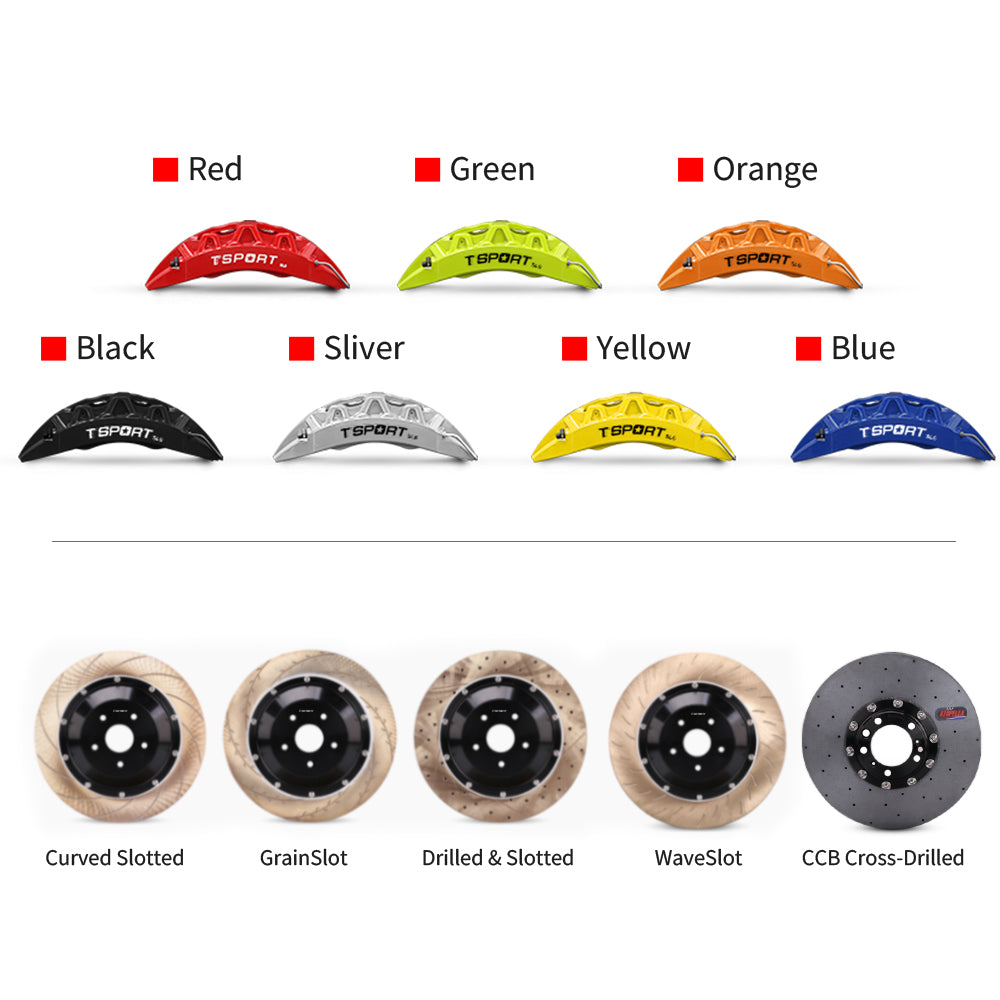
| 盤面花紋 | 弧線溝槽 / 直線溝槽 / 波浪溝槽 / 鑽孔加溝槽 | 鑽孔通風 |
| 煞車來令片配方 | ||
| 規格 | 鑄鐵碟盤專用來令片 | 碳陶瓷(CCB)碟盤專用來令片 |
| 適用碟盤 | 僅適用鑄鐵/鋼製碟盤 | 僅適用碳陶瓷碟盤 |
| 工作溫度 | 0–600 °C | 0–700 °C |
| 平均摩擦係數 μ | 0.38(隨溫度、管路壓力、碟盤狀況而異) | 0.45(隨溫度、管路壓力、碟盤狀況而異) |
鑄鐵與 CCB 系統無法互通。請務必選用與實際安裝碟盤材質相符的來令片配方。
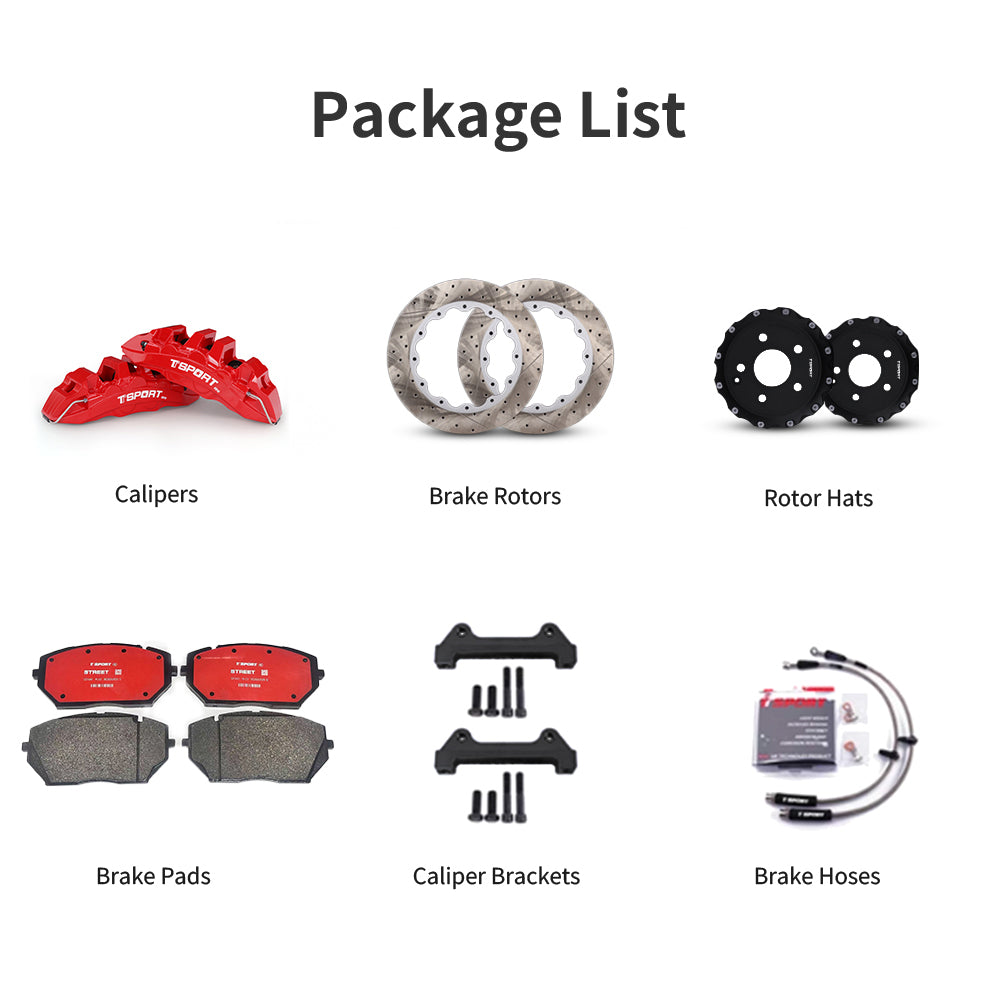
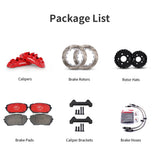
兩具 EB10 鍛造十活塞前卡鉗。
適用於兩具卡鉗的完整來令片組。
兩片前碟盤,對應所選碟盤材質與尺寸。
兩組專車專用 CNC 切削卡鉗固定座。
兩只 CNC 切削碟盤盤帽,對應所選車型配置。
兩條不鏽鋼金屬編織煞車油管,附原廠樣式車身側接頭。
重要: EB10 是依平台調校的大煞車套件。卡鉗轉接座是否供應取決於車型。請提供完整車輛與輪圈資訊與我們聯繫,以確認安裝相容性。

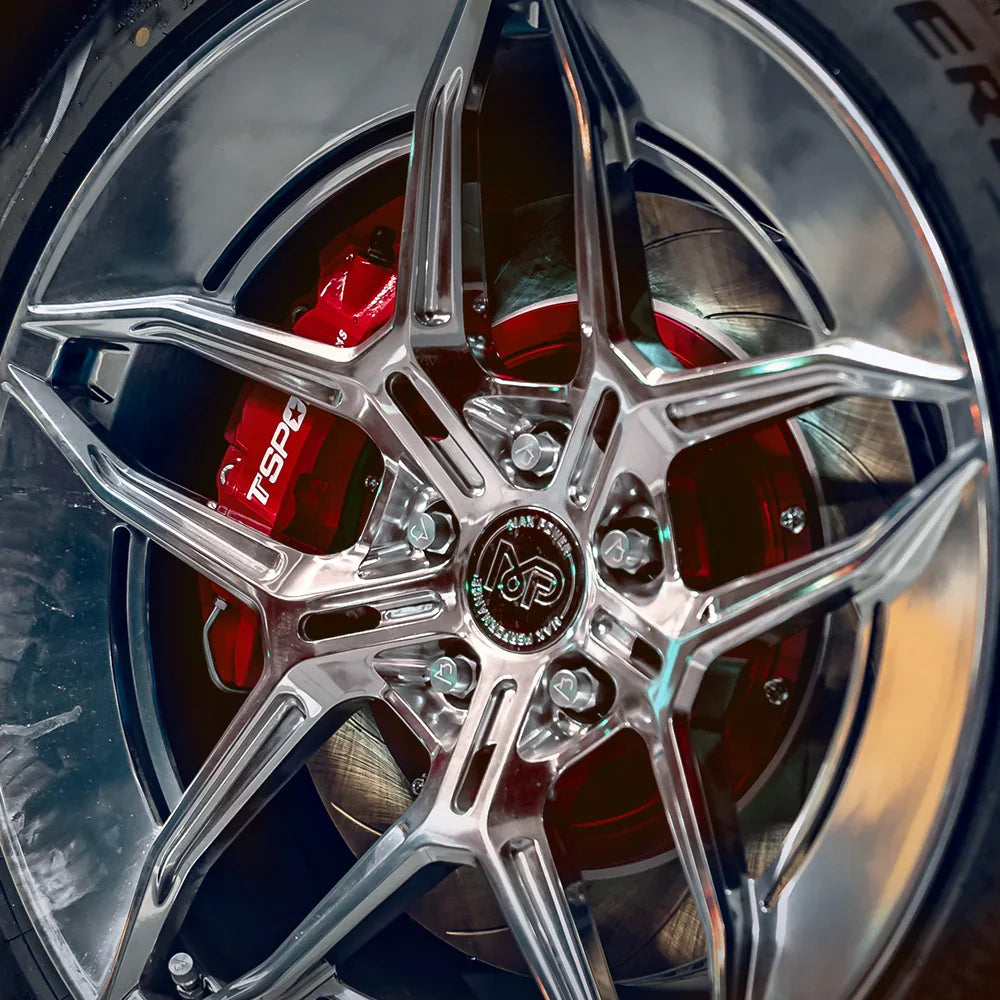
最小輪圈尺寸: 20 吋或更大。

最小輪輻間隙: 108 mm(碟盤內側至輪輻內側的距離)。

輪輻幾何、ET 值與輪圈內桶形狀在不同輪圈型號之間差異極大——強烈建議在最終購買前使用列印的間隙樣板或實際試裝。
10 活塞配置(4× 28 mm + 6× 30 mm)將夾緊力分散在較長的來令片上,使來令片壓力更均勻、減少偏磨,並帶來受控的初始咬合,且隨碟盤溫度升高仍保持線性。每只卡鉗的活塞總面積為 67.0 cm²。
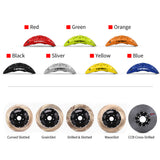
雙片式碟盤提供 Ø420 mm × 40 mm 與 Ø440 mm × 40 mm 兩種規格,材質可選經熱處理的高碳鑄鐵或碳陶瓷複合材料(CCB)。鑄鐵碟盤提供曲線溝槽、細紋溝槽、波浪溝槽或鑽孔加溝槽盤面。CCB 碟盤為交叉鑽孔且浮動式設計。
建議至少使用 20 吋輪圈,且碟盤內側至輪輻內側的距離必須至少 108 mm。輪圈偏移值、輪輻幾何與輪圈筒身形狀各異,因此我們強烈建議在訂購前進行間隙檢查或使用樣板試裝。
EB10 是依平台調校的大型煞車套件。卡鉗轉接座以 CNC 加工製作,以符合特定車型應用,煞車油管則採用 OEM 樣式車體端接頭。請提供您的車輛年份、廠牌、車型、等級與輪圈規格,以便我們確認安裝相容性與轉接座供應情況。
鑄鐵碟盤專用來令片的工作溫度為 0–600 °C,平均 μ 為 0.38。碳陶瓷來令片的工作溫度為 0–700 °C,平均 μ 為 0.45,且僅相容於 CCB 碟盤。不同材質的來令片與碟盤不可交叉搭配使用。
是的。必須進行正確的磨合循環,讓來令片材質均勻轉移到碟盤盤面、穩定摩擦層,並釋放完整的制動扭力與熱效能。跳過磨合可能導致抖動、來令片釉化,以及踏板回饋不一致。
請將您的車輛資訊、輪圈規格與預期用途傳送給我們。我們將確認卡鉗轉接座供應情況,推薦碟盤尺寸與來令片配方,並帶您了解卡鉗顏色與碟盤表面選項。
Brake Kits · Fitment · Installation · Care Guide
A brake kit is not just a pair of larger calipers. Calipers, rotors, pads, hoses, brackets, rotor hats, mounting hardware, brake fluid, wheel clearance, and bedding procedure all work together as one system.
This guide explains how to confirm the right TTSPORT brake kit before ordering, what to check before installation, and how to care for the system after installation.
Do not order a brake kit by vehicle name alone. The correct kit depends on the vehicle, axle position, wheel package, driving use, and brake system layout.
Wheel Clearance & Data Disclaimer: Technical fitment data applies strictly to rotor hats and mounting brackets—not wheel geometry. Wheel compatibility specs are provided for general reference only. Insufficient wheel clearance is not covered under warranty or data accuracy claims; if clearance is insufficient, wheel spacers must be added at the customer's discretion.
Different TTSPORT brake kit series use different hardware layouts. Always confirm what the kit includes before purchase.
Use direct-mount calipers and one-piece rotors where specified. These kits do not use rotor hats or caliper brackets unless the final product page clearly states otherwise.
Use separate friction rings and rotor hats. Hat offset, ring bolt pattern, hardware style, and rotor direction must be matched correctly.
May require bespoke brackets, rotor hats, brake lines, and engineering confirmation based on knuckle, hub, wheel, and competition use.
Require extra attention to wheel clearance, tire size, vehicle load, descent control, hose routing, and dust / water exposure.
Do not assume every brake kit includes the same parts. Package contents vary by product series, vehicle application, and final order configuration.
Before finalizing the order, review the kit specification carefully. Confirm the brake kit is matched to your vehicle and wheel setup, not only to the model name.
If any part is not listed in the final order or product page, do not assume it is included.
Inspect every component before installation. Do not modify, grind, drill, stretch, force, or space brake kit components to make them fit.
Safety: Brake kits affect braking force, hydraulic sealing, heat control, wheel clearance, and vehicle stability. Do not install the kit if fitment, torque, direction, clearance, or compatibility is unclear.
Correct installation is as important as the brake kit itself. A properly engineered kit can still perform poorly if installed with dirty mounting faces, incorrect torque, poor hose routing, or trapped air in the hydraulic system.
Verify caliper centering over the rotor and confirm even pad sweep across the friction surface.
Confirm left / right rotor direction if the rotor uses directional vanes or directional face pattern.
Check brake hose length and routing at full steering lock and full suspension travel. No twisting, rubbing, stretching, or kinking.
Check caliper-to-spoke and caliper-to-barrel clearance before road use. Wheel specs are for general estimation only—clearance issues are excluded from warranty/data claims and may require user-supplied wheel spacers.
Use the correct brake fluid type and bleed the system until pedal feel is firm and consistent.
Torque all brake hardware to the specified value. Do not reuse damaged, unknown, stretched, or corroded safety-critical fasteners.
Brake pads and rotors need a controlled bedding process before full performance is available. Bedding helps create an even transfer layer on the rotor surface, improving bite, pedal consistency, and vibration resistance.
Street pads, race pads, iron rotors, two-piece rotors, and carbon ceramic rotors may require different bedding procedures. Use the procedure supplied with the specific kit.
After installation and bedding, give the system a short break-in period before aggressive use. Pedal feel, pad contact, dust output, and noise may continue to settle after the first drives.
Brake kits need regular inspection, especially after track use, off-road use, towing, mountain driving, winter salt exposure, or any brake service.
Inspect pads, rotors, fluid level, and hose condition during normal service intervals. Prioritize quiet operation, smooth pedal feel, and even wear.
Check pad thickness, rotor surface condition, and fluid condition more often. Long descents create sustained heat even without track use.
Inspect for mud, sand, stone impact, hose abrasion, dust boot damage, and caliper contamination after trail use.
Inspect pads, rotors, fluid, and hardware before and after every event. Track heat shortens service intervals.
Check rear brake temperature, hydraulic handbrake behavior, pad wear, rotor cracking, and hardware condition frequently.
Use only compatible pads and approved bedding procedures. Inspect rotor surface condition carefully and avoid incompatible friction materials.
Do not continue driving if the brake system shows any of the following symptoms. Inspect the system or contact a qualified brake technician before using the vehicle again.
Send your vehicle details, brake kit series, wheel specs, driving use, photos, and any symptoms you notice. TTSPORT will help confirm fitment, installation checks, and the correct care path for your brake kit.
感謝您的訂閱!
此電子郵件已被註冊!