

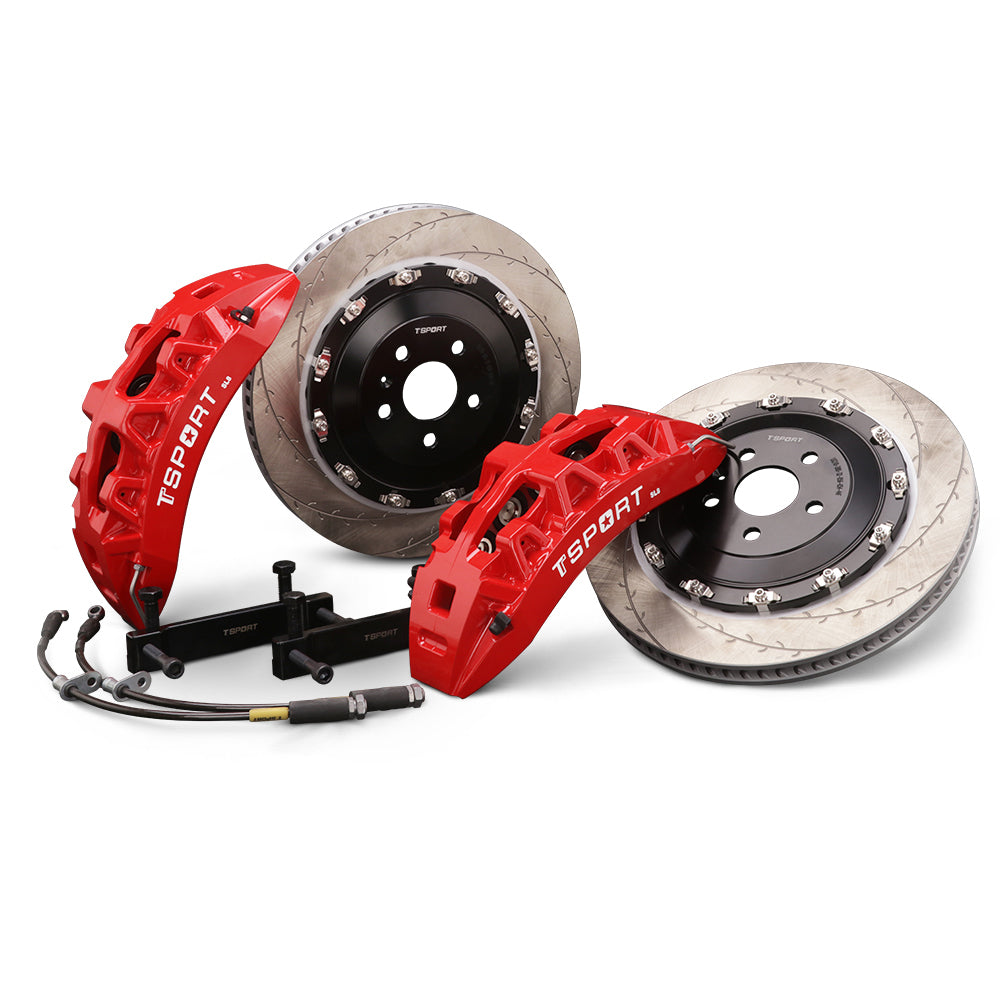


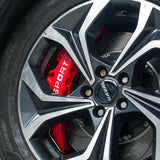


สถาปัตยกรรม 8 พิสตันแบบ Slim
ตัวคาลิปเปอร์แบบเพรียวบาง (กว้าง 128 มม.) ช่วยรักษาระยะห่างล้อในขณะที่ใช้ดีไซน์ 8 พิสตันแบบโมโนบล็อกแท้
ซีรีส์ Slim · เพลาหน้า · 8 พิสตัน
TTSPORT Slim SL8 คือชุดเบรกใหญ่หน้าแบบ 8 พิสตันที่สร้างขึ้นจากคาลิปเปอร์อะลูมิเนียมหลอมขึ้นรูปสองชิ้นแบบเพรียวบาง จับคู่การจัดวางพิสตันแบบเหลื่อม 28/32 มม. กับจานเบรกสองชิ้นขนาด 380–405 มม. เพื่อมอบความจุความร้อนสูง การควบคุมแป้นเบรกที่มั่นคง และการหยุดที่ทำซ้ำได้อย่างสม่ำเสมอภายใต้ล้อขนาด 19 นิ้วขึ้นไป
ตัวคาลิปเปอร์แบบเพรียวบาง (กว้าง 128 มม.) ช่วยรักษาระยะห่างล้อในขณะที่ใช้ดีไซน์ 8 พิสตันแบบโมโนบล็อกแท้
พิสตันนำ 28 มม. × 4 และพิสตันตาม 32 มม. × 4 กระจายแรงกดอย่างสม่ำเสมอทั่วผ้าเบรก เพื่อการกัดที่มั่นคงและลดการสึกแบบเรียว
มีความแข็งแกร่งต่อน้ำหนักสูงกว่าคาลิปเปอร์หล่อ 5.20 กก. ต่อคาลิปเปอร์โดยไม่รวมผ้าเบรก
พิสตันหุ้มฉนวนความร้อนชิ้นเดียวพร้อมยางกันฝุ่น ช่วยจำกัดการสะสมความร้อนของน้ำมันเบรกในระหว่างการหยุดต่อเนื่อง และปกป้องซีลจากเศษฝุ่นทราย
ระบายอากาศภายใน มีทิศทางซ้าย/ขวา พร้อมตัวเลือกเหล็ก/เหล็กกล้า หรือคาร์บอน-เซรามิก สำหรับการใช้งานบนถนนและวันแข่ง
| คาลิปเปอร์เบรก | ||
|---|---|---|
| ซีรีส์ | ซีรีส์สลิม | |
| รุ่น / การใช้งาน | SL8 | |
| ตำแหน่งเพลา | ด้านหน้า | |
| จำนวนลูกสูบ | 8 ลูกสูบ | |
| ประเภทลูกสูบ | พิสตันหุ้มฉนวนความร้อนชิ้นเดียวพร้อมยางกันฝุ่น | |
| เส้นผ่านศูนย์กลางลูกสูบ | 28 มม. × 4 / 32 มม. × 4 | |
| พื้นที่ลูกสูบรวม | 56.8 ซม.² ต่อคาลิปเปอร์ (รวมลูกสูบทั้งหมด) | |
| ขนาดคาลิปเปอร์ | ยาว 391 มม. × กว้าง 128 มม. × สูง 144 มม. | |
| กระบวนการผลิต | ตัวเรือนอะลูมิเนียมตีขึ้นรูปสองชิ้น | |
| น้ำหนักสุทธิ | 5.20 กก. ต่อคาลิปเปอร์ ไม่รวมผ้าเบรก | |
| ผิวสำเร็จ | การเคลือบเงาทนอุณหภูมิสูง | |
| ขนาดล้อที่แนะนำ | 19 นิ้วขึ้นไป | |
| ขนาดจานดิสก์ที่แนะนำ | Ø380–405 มม. × 34 มม. | |
| ตัวเลือกจานเบรก | ||
| ตัวเลือกจานเบรก | จานเบรกเหล็กหล่อ / เหล็กกล้า | ดิสก์คาร์บอน-เซรามิก |
| วัสดุจานเบรก | เหล็กหล่อคาร์บอนสูงผ่านการอบชุบความร้อน | คอมโพสิตคาร์บอน-เซรามิก |
| ตำแหน่งเพลา | ด้านหน้า | ด้านหน้า |
| ขนาดจานเบรก | Ø380 / 405 มม. × 34 มม. | Ø380 / 405 มม. × 34 มม. |
| โครงสร้าง | ชุดประกอบสองชิ้น | ชุดประกอบสองชิ้น |
| การระบายอากาศ | มีช่องระบายอากาศภายใน | มีช่องระบายอากาศภายใน |
| การยึดจานเบรก | แบบยึดติดหรือแบบลอย ขึ้นอยู่กับขนาด/การใช้งาน | แบบลอย |
| ดีไซน์ระบุทิศทาง | ใช่ — ระบุซ้าย/ขวา | ใช่ — ระบุซ้าย/ขวา |
| รูปแบบหน้าจานเบรก | ร่องโค้ง / ร่องเกรน / ร่องเวฟ / เจาะรูพร้อมร่อง | เจาะรูทะลุ |
| ตัวเลือกผ้าเบรก | ||
| ตัวเลือกผ้าเบรก | สำหรับจานเบรกเหล็กหล่อ / เหล็ก | สำหรับจานคาร์บอน-เซรามิก |
| วัสดุจานเบรกที่รองรับ | เหล็กหล่อ / เหล็กกล้าเท่านั้น | คาร์บอน-เซรามิกเท่านั้น |
| ช่วงอุณหภูมิใช้งาน | 0–600 °C | 0–700 °C |
| ค่าสัมประสิทธิ์ความเสียดทานเฉลี่ย | μ ≈ 0.38 | μ ≈ 0.45 |
| สายเบรก | ||
| โครงสร้างสายเบรก | โครงสร้างสามชั้น | |
| วัสดุสายเบรก | ชั้นใน PTFE / ถักสแตนเลส SUS304 / ปลอกหุ้มป้องกันชั้นนอก PVC | |
| ฟังก์ชันสายเบรก | ลดการขยายตัวของสายเบรกภายใต้แรงดัน เพื่อให้แป้นเบรกมั่นคงขึ้น | |
| ข้อต่อสายเบรก | ออกแบบเฉพาะสำหรับรถแต่ละรุ่นทั้งฝั่งคาลิเปอร์และฝั่งแชสซี | |
| ขายึด | ||
| กระบวนการผลิตดุมจานเบรก | ขึ้นรูปด้วยเครื่อง CNC | |
| วัสดุดุมจานเบรก | อะลูมิเนียมอัลลอยด์ความแข็งแรงสูง | |
| กระบวนการผลิตขายึดคาลิปเปอร์ | ขึ้นรูปด้วยเครื่อง CNC | |
| วัสดุขายึดคาลิปเปอร์ | เหล็กกล้าคาร์บอน | |
| ประเภทการติดตั้งคาลิปเปอร์ | ยึดแบบเรเดียลพร้อมขายึดเฉพาะรุ่นรถ | |
| ความเข้ากันได้และการติดตั้ง | ||
| ระยะห่างซี่ล้อขั้นต่ำ | 90 มม. | |
| ขนาดล้อที่แนะนำ | 19 นิ้วขึ้นไป | |
| การเลือกขนาดเส้นผ่านศูนย์กลางจานเบรก | 380 หรือ 405 มม. เลือกตามการใช้งานของรถแต่ละรุ่นและระยะเคลียร์ล้อ | |
| ขั้นตอนการเบดดิ้งอิน (Bedding-In) | จำเป็นก่อนการใช้งานปกติ | |
จานเบรกเหล็กหล่อ/เหล็กกล้าเหมาะสำหรับการใช้งานบนถนนที่ดุดันและสนามแข่ง จานเบรกคาร์บอน-เซรามิกลดน้ำหนักที่ไม่มีสปริงรองรับและต้านทานการเสื่อมสภาพในการใช้งานที่อุณหภูมิสูงต่อเนื่อง ค่าแรงเสียดทานเปลี่ยนตามอุณหภูมิ แรงดันในสายเบรก และสภาพของจานเบรก วัสดุผ้าเบรกและจานเบรกต้องเข้าคู่กัน — ห้ามใช้ผ้าเบรกสำหรับจานเหล็กกับจานคาร์บอน-เซรามิกโดยเด็ดขาด
คาลิเปอร์หน้า SL8 8 พิสตัน จำนวน 2 ตัว
ชุดผ้าเบรกที่จับคู่มาสำหรับคาลิปเปอร์หน้าทั้งสองตัว
จานเบรกสองชิ้นในขนาดและวัสดุที่คุณเลือก
ขายึดเหล็กกล้าคาร์บอนที่ผ่านการกลึง CNC ขนาดสำหรับการติดตั้งแบบเรเดียลเมาท์บนแชสซีที่เข้าคู่กัน
ดุมจานเบรกอะลูมิเนียมอัลลอยความแข็งแรงสูง ขึ้นรูปด้วยเครื่อง CNC
สายเบรกถักสแตนเลสพร้อมข้อต่อเฉพาะรุ่นรถ
การติดตั้งล้อไม่สามารถใช้ได้กับทุกรุ่น ควรตรวจสอบระยะห่างซี่ล้อ ความลึกช่องคาลิเปอร์ และออฟเซ็ตล้อ เทียบกับขนาดคาลิเปอร์ที่ให้มา (391 × 128 × 144 มม.) ก่อนสั่งซื้อ ส่งสเปคล้อและรายละเอียดรถของคุณให้ทีมงานของเราเพื่อตรวจสอบระยะเคลียร์

ต้องใช้ล้อขนาด 19 นิ้วขึ้นไป

SL8 ต้องการระยะห่างซี่ล้ออย่างน้อย 90 มม.

SL8 เป็นชุดเบรกใหญ่ที่ดัดแปลงตามแพลตฟอร์ม ยืนยันปี ยี่ห้อ รุ่น และสเปคล้อของคุณกับทีมงานของเรา เพื่อให้เราจัดส่งขายึดและชุดสายเบรกที่ถูกต้อง
ต้องใช้ล้อขนาด 19 นิ้วขึ้นไป โดยมีระยะเคลียร์ก้านล้อขั้นต่ำ 90 มม. ความกว้างคาลิเปอร์แบบสลิม 128 มม. ช่วยได้ แต่ดีไซน์ล้อแต่ละรุ่นแตกต่างกัน — ควรตรวจสอบระยะเคลียร์ก่อนสั่งซื้อ
ลูกสูบด้านนำที่มีขนาดเล็กกว่าและลูกสูบด้านตามที่มีขนาดใหญ่กว่าช่วยกระจายแรงกดให้สม่ำเสมอมากขึ้นทั่วผ้าเบรก ซึ่งลดการสึกหรอแบบเอียงของผ้าเบรก และให้การควบคุมแป้นเบรกเป็นเส้นตรงมากขึ้นเมื่อเบรกซ้ำ ๆ
จานเบรกเหล็ก/เหล็กกล้าให้แรงกัดจับที่แข็งแกร่ง คุ้มค่าระดับยอดเยี่ยม และทนทานต่อการใช้งานบนถนนแบบดุดันและการใช้งานในสนามแข่ง จานเบรกคาร์บอน-เซรามิกช่วยลดน้ำหนักใต้สปริง ทนต่ออาการเฟดได้นานขึ้นที่อุณหภูมิสูงมาก และมีอายุการใช้งานยาวนานขึ้นอย่างมีนัยสำคัญ — ในราคาที่สูงกว่า
SL8 เป็นชุดเบรกใหญ่ที่ปรับให้เข้ากับแพลตฟอร์มรถโดยเฉพาะ คาลิเปอร์ ขายึด และข้อต่อสายเบรกจะถูกจับคู่ให้ตรงกับรถของคุณ โปรดยืนยันปี ยี่ห้อ รุ่น และสเปกล้อกับทีมของเรา เพื่อให้เราจัดส่งขายึดและชุดสายเบรกที่ถูกต้องให้คุณ
ผ้าเบรกจะถูกจับคู่ตามประเภทจานเบรกที่คุณเลือก จานเบรกเหล็ก/เหล็กกล้าใช้ผ้าเบรกช่วง 0–600 °C ที่มี μ ≈ 0.38 จานเบรกคาร์บอน-เซรามิกใช้ผ้าเบรกเฉพาะ CCB ที่รองรับ 0–700 °C และมี μ ≈ 0.45 วัสดุผ้าเบรกและจานเบรกต้องจับคู่กันเสมอ
ใช่ จำเป็นต้องมีขั้นตอนการเบิร์นอินที่ถูกต้องเพื่อสร้างชั้นผ้าเบรกถ่ายโอนที่สม่ำเสมอบนผิวจานเบรก การข้ามขั้นตอนนี้อาจทำให้แรงเสียดทานไม่สม่ำเสมอ สั่น และประสิทธิภาพการหยุดลดลง
ส่งข้อมูลรถ สเปกล้อ และจานเบรกที่ต้องการมาให้เรา เราจะยืนยันระยะห่างและชุดขายึด/สายเบรกที่ถูกต้องก่อนจัดส่งชุดคิท
Brake Kits · Fitment · Installation · Care Guide
A brake kit is not just a pair of larger calipers. Calipers, rotors, pads, hoses, brackets, rotor hats, mounting hardware, brake fluid, wheel clearance, and bedding procedure all work together as one system.
This guide explains how to confirm the right TTSPORT brake kit before ordering, what to check before installation, and how to care for the system after installation.
Do not order a brake kit by vehicle name alone. The correct kit depends on the vehicle, axle position, wheel package, driving use, and brake system layout.
Wheel Clearance & Data Disclaimer: Technical fitment data applies strictly to rotor hats and mounting brackets—not wheel geometry. Wheel compatibility specs are provided for general reference only. Insufficient wheel clearance is not covered under warranty or data accuracy claims; if clearance is insufficient, wheel spacers must be added at the customer's discretion.
Different TTSPORT brake kit series use different hardware layouts. Always confirm what the kit includes before purchase.
Use direct-mount calipers and one-piece rotors where specified. These kits do not use rotor hats or caliper brackets unless the final product page clearly states otherwise.
Use separate friction rings and rotor hats. Hat offset, ring bolt pattern, hardware style, and rotor direction must be matched correctly.
May require bespoke brackets, rotor hats, brake lines, and engineering confirmation based on knuckle, hub, wheel, and competition use.
Require extra attention to wheel clearance, tire size, vehicle load, descent control, hose routing, and dust / water exposure.
Do not assume every brake kit includes the same parts. Package contents vary by product series, vehicle application, and final order configuration.
Before finalizing the order, review the kit specification carefully. Confirm the brake kit is matched to your vehicle and wheel setup, not only to the model name.
If any part is not listed in the final order or product page, do not assume it is included.
Inspect every component before installation. Do not modify, grind, drill, stretch, force, or space brake kit components to make them fit.
Safety: Brake kits affect braking force, hydraulic sealing, heat control, wheel clearance, and vehicle stability. Do not install the kit if fitment, torque, direction, clearance, or compatibility is unclear.
Correct installation is as important as the brake kit itself. A properly engineered kit can still perform poorly if installed with dirty mounting faces, incorrect torque, poor hose routing, or trapped air in the hydraulic system.
Verify caliper centering over the rotor and confirm even pad sweep across the friction surface.
Confirm left / right rotor direction if the rotor uses directional vanes or directional face pattern.
Check brake hose length and routing at full steering lock and full suspension travel. No twisting, rubbing, stretching, or kinking.
Check caliper-to-spoke and caliper-to-barrel clearance before road use. Wheel specs are for general estimation only—clearance issues are excluded from warranty/data claims and may require user-supplied wheel spacers.
Use the correct brake fluid type and bleed the system until pedal feel is firm and consistent.
Torque all brake hardware to the specified value. Do not reuse damaged, unknown, stretched, or corroded safety-critical fasteners.
Brake pads and rotors need a controlled bedding process before full performance is available. Bedding helps create an even transfer layer on the rotor surface, improving bite, pedal consistency, and vibration resistance.
Street pads, race pads, iron rotors, two-piece rotors, and carbon ceramic rotors may require different bedding procedures. Use the procedure supplied with the specific kit.
After installation and bedding, give the system a short break-in period before aggressive use. Pedal feel, pad contact, dust output, and noise may continue to settle after the first drives.
Brake kits need regular inspection, especially after track use, off-road use, towing, mountain driving, winter salt exposure, or any brake service.
Inspect pads, rotors, fluid level, and hose condition during normal service intervals. Prioritize quiet operation, smooth pedal feel, and even wear.
Check pad thickness, rotor surface condition, and fluid condition more often. Long descents create sustained heat even without track use.
Inspect for mud, sand, stone impact, hose abrasion, dust boot damage, and caliper contamination after trail use.
Inspect pads, rotors, fluid, and hardware before and after every event. Track heat shortens service intervals.
Check rear brake temperature, hydraulic handbrake behavior, pad wear, rotor cracking, and hardware condition frequently.
Use only compatible pads and approved bedding procedures. Inspect rotor surface condition carefully and avoid incompatible friction materials.
Do not continue driving if the brake system shows any of the following symptoms. Inspect the system or contact a qualified brake technician before using the vehicle again.
Send your vehicle details, brake kit series, wheel specs, driving use, photos, and any symptoms you notice. TTSPORT will help confirm fitment, installation checks, and the correct care path for your brake kit.
ขอบคุณสำหรับการสมัครสมาชิก!
อีเมลนี้ได้รับการลงทะเบียนแล้ว!