



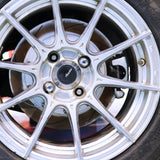


คาลิปเปอร์หลังแบบ Direct-Mount
คาลิปเปอร์หลังแบบหล่อ Direct-Mount พร้อมลูกสูบ 30 มม. หนึ่งตัว และจุกกันฝุ่น เพื่อความทนทานในใช้งานประจำวัน
ซีรีส์ Direct-Mount · เพลาหลัง · ชุดดิสก์ลูกสูบเดี่ยว
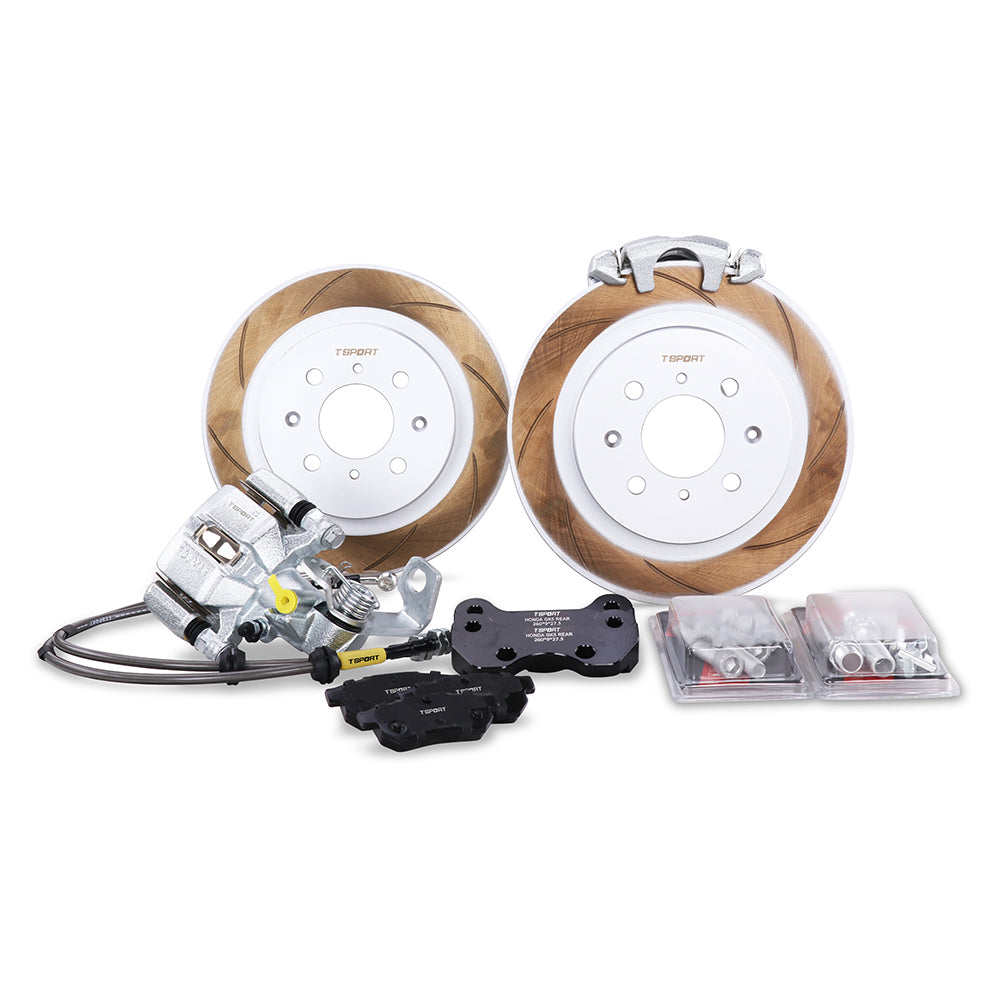
ความสมดุลของเพลาหลังคือสิ่งที่ทำให้ชุดเบรกใหญ่ด้านหน้าทำงานได้จริง ชุดดิสก์ลูกสูบเดี่ยวด้านหลัง TTSPORT ซีรีส์ Direct-Mount นี้ อัปเกรด Honda Fit / Jazz ด้วยคาลิปเปอร์หลังแบบหล่อ โรเตอร์แบบมีทิศทาง Solid Ø260 / Ø280 มม. × 9 มม. และสายเบรกถักสแตนเลสสตีลเฉพาะรุ่น
สร้างขึ้นสำหรับแพลตฟอร์ม GE / GG, GK / GH / GP และ GR / GS Fit / Jazz ที่ต้องการชุดดิสก์หลังที่เข้าคู่กันสำหรับเบรกหน้าที่แรงขึ้น การขับขี่บนถนนแบบสปอร์ต การขับแบบออโตครอส หรือการแปลงเป็นเบรกหลังที่ดูเรียบร้อยขึ้น
คาลิปเปอร์หลังแบบหล่อ Direct-Mount พร้อมลูกสูบ 30 มม. หนึ่งตัว และจุกกันฝุ่น เพื่อความทนทานในใช้งานประจำวัน
โรเตอร์หลังแบบ Solid Ø260 หรือ Ø280 มม. × 9 มม. วัสดุไฮคาร์บอน มีทิศทางซ้าย/ขวา ลายหน้าแบบ Curved slot / Grain Slot
ออกแบบมาเพื่อเสริมชุดเบรกหน้าที่แรงขึ้นโดยไม่ให้แรงเกินไปที่เพลาหลัง
สายเบรก 3 ชั้น PTFE / SUS304 / PVC ช่วยลดการขยายตัวของสาย ส่งผลให้การตอบสนองของแป้นเบรกหลังแน่นขึ้น
ผ้าเบรกรองรับอุณหภูมิ 0–600 °C ค่า μ เฉลี่ย 0.38 เหมาะสำหรับการขับขี่ประจำวันและใช้งานสปอร์ตบนโรเตอร์เหล็ก / เหล็กกล้า
ออกแบบสำหรับล้อขนาด 15 นิ้วขึ้นไป โดยมีระยะห่างซี่ล้อขั้นต่ำอย่างน้อย 42 มม.
| คาลิปเปอร์เบรก | ||
|---|---|---|
| ซีรีส์ | ซีรีส์ Direct-Mount | |
| รุ่น / การใช้งาน | ดิสก์เบรกหลัง Honda Fit / Jazz | |
| ตำแหน่งเพลา | หลัง | |
| จำนวนลูกสูบ | 1 พิสตัน | |
| ประเภทลูกสูบ | ลูกสูบชิ้นเดียวพร้อมยางกันฝุ่น | |
| เส้นผ่านศูนย์กลางลูกสูบ | 30 มม. × 1 | |
| ขนาดคาลิปเปอร์ | ยาว 156 มม. × กว้าง 133 มม. × สูง 89 มม. | |
| พื้นที่ลูกสูบรวม | 7.1 ซม.² ต่อคาลิปเปอร์ รวมลูกสูบทั้งหมด | |
| กระบวนการผลิต | โครงสร้างแบบหล่อ | |
| น้ำหนักสุทธิ | 2.10 กก. ต่อคาลิปเปอร์ ไม่รวมผ้าเบรก | |
| ผิวสำเร็จ | เคลือบผิวด้วยระบบอิเล็กโทรโฟเรติก | |
| ขนาดล้อที่แนะนำ | 15 นิ้วขึ้นไป | |
| ขนาดจานดิสก์ที่แนะนำ | Ø260–280 มม. × 9 มม. | |
| ตัวเลือกจานเบรก | ||
| ตัวเลือกจานเบรก | จานเบรกหลัง 260 มม. | จานเบรกหลัง 280 มม. |
| วัสดุจานเบรก | เหล็กหล่อคาร์บอนสูงผ่านการอบชุบความร้อน | เหล็กหล่อคาร์บอนสูงผ่านการอบชุบความร้อน |
| ตำแหน่งเพลา | หลัง | หลัง |
| ขนาดจานเบรก | Ø260 มม. × 9 มม. | Ø280 มม. × 9 มม. |
| โครงสร้าง | จานเบรกชิ้นเดียว | จานเบรกชิ้นเดียว |
| การระบายอากาศ | แบบทึบ | แบบทึบ |
| การยึดจานเบรก | แบบคงที่ | แบบคงที่ |
| ดีไซน์ระบุทิศทาง | ใช่ — ระบุซ้าย/ขวา | ใช่ — ระบุซ้าย/ขวา |
| รูปแบบหน้าจานเบรก | ร่องโค้ง / ร่องแบบ Grain Slot | ร่องโค้ง / ร่องแบบ Grain Slot |
| ผ้าเบรก | ||
| วัสดุจานเบรกที่รองรับ | รองรับเฉพาะจานเบรกเหล็ก / เหล็กกล้า | |
| ช่วงอุณหภูมิใช้งาน | 0–600 °C | |
| ค่าสัมประสิทธิ์ความเสียดทานเฉลี่ย | ค่า μ เฉลี่ย: 0.38; ค่าที่เปลี่ยนแปลงขึ้นอยู่กับอุณหภูมิ แรงดันในระบบเบรก และสภาพจานเบรก | |
| สายเบรก | ||
| โครงสร้างสายเบรก | โครงสร้างเสริมแรงแบบสามชั้น | |
| วัสดุสายเบรก | ชั้นใน PTFE / ถักสแตนเลส SUS304 / ปลอกหุ้มป้องกัน PVC | |
| ข้อต่อสายเบรก | ข้อต่อเฉพาะรุ่นรถ; ข้อต่อฝั่งคาลิปเปอร์และฝั่งแชสซีจะแตกต่างกันไปตามการใช้งาน | |
| การใช้งานกับรุ่นรถและการจับคู่จานเบรก | ||
| 2009-2014 Honda Fit / Jazz (GE / GG) | หลัง · Ø260 / Ø280 มม. × 9 มม. | |
| 2014-2020 Honda Fit / Jazz (GK / GH / GP) | หลัง · Ø260 / Ø280 มม. × 9 มม. | |
| 2020-2026 Honda Fit / Jazz (GR / GS) | หลัง · Ø260 / Ø280 มม. × 9 มม. | |
| ความเข้ากันได้และการติดตั้ง | ||
| การใช้งานหลักกับรุ่นรถ | Honda Fit / Jazz | |
| ปีรุ่น & รหัสแชสซี | 2009-2014 GE / GG · 2014-2020 GK / GH / GP · 2020-2026 GR / GS | |
| เพลา | หลัง | |
| ประเภทการติดตั้งคาลิปเปอร์ | ติดตั้งแบบตรง | |
| ขนาดล้อขั้นต่ำ | 15 นิ้วขึ้นไป | |
| ระยะห่างซี่ล้อขั้นต่ำ | 42 มม. | |
| หมายเหตุดุมล้อหลัง / เบรกจอด | ดุมล้อหลังตามระดับการตกแต่ง โครงสร้างนัคเคิล จุดเชื่อมต่อสายเบรก และการตั้งค่าเบรกจอด แตกต่างกันไปในแต่ละรุ่นของ Fit / Jazz | |
| ขั้นตอนการเบดดิ้งอิน (Bedding-In) | จำเป็นต้องใช้ | |
ดุมล้อหลังและการตั้งค่าเบรกจอดแตกต่างกันไปตามระดับการตกแต่งในแต่ละรุ่นของ Fit / Jazz โปรดตรวจสอบรหัสตัวถัง โครงสร้างดุมหลัง / นัคเคิล จุดเชื่อมต่อสายเบรก ชุดเบรกจอด เส้นผ่านศูนย์กลางจานเบรก และระยะห่างล้อ ก่อนสั่งซื้อ
คาลิปเปอร์หลังแบบ Direct-Mount ชนิดหล่อ 1 พิสตัน จำนวน 2 ตัว พร้อมยางกันฝุ่น
ผ้าเบรกสำหรับคาลิเปอร์หลังทั้งสองตัว รองรับอุณหภูมิ 0–600 °C และออกแบบสำหรับจานเหล็ก / จานสตีล
จานเบรกหลังแบบทึบมีทิศทาง ชิ้นเดียว ขนาด Ø260 หรือ Ø280 มม. × 9 มม. จำนวน 2 ใบ
สายเบรกหลังแบบถักสแตนเลสจำนวน 2 เส้น พร้อมข้อต่อด้านคาลิปเปอร์และด้านตัวถังเฉพาะรุ่นรถ
นี่คือชุดดิสก์เบรกหลังแบบ Direct-Mount สำหรับรูปแบบนี้ จะไม่ใช้ดุมจานเบรกและขายึดคาลิปเปอร์แบบอเนกประสงค์ เว้นแต่การแปลงเฉพาะรุ่นการใช้งานนั้นจำเป็นต้องมีการยืนยันฮาร์ดแวร์เฉพาะรถแยกต่างหาก
การแปลงเป็นดิสก์เบรกหลังและงานที่เกี่ยวข้องกับเบรกมือ จำเป็นต้องได้รับการยืนยันรุ่นการใช้งานที่ถูกต้อง โปรดยืนยันรหัสแชสซี รูปแบบดุมล้อหลัง/นัคเคิล จุดเชื่อมต่อสายเบรก การตั้งค่าเบรกมือ เส้นผ่านศูนย์กลางจานเบรก และระยะห่างล้อ ก่อนสั่งซื้อ

ต้องใช้ล้อขนาด 15 นิ้วขึ้นไป

ระยะห่างก้านล้อขั้นต่ำ: 42 มม.

ตรวจสอบรหัสแชสซี Honda Fit / Jazz: GE / GG, GK / GH / GP หรือ GR / GS
ขนาดเส้นผ่านศูนย์กลางล้อเพียงอย่างเดียวไม่ได้รับประกันระยะห่างคาลิปเปอร์ โปรดยืนยันรูปทรงก้านล้อ โครงสร้างดุมล้อหลัง/นัคเคิล การกำหนดค่าเบรกมือ และรูปแบบข้อต่อสายเบรก ก่อนสั่งซื้อ
ชุดดิสก์เบรกหลังนี้ถูกออกแบบสำหรับ Honda Fit / Jazz รหัสตัวถัง GE / GG, GK / GH / GP และ GR / GS ดุมหลัง การจัดวางน็อคเกิล จุดต่อสายเบรก และการตั้งเบรกมือจะแตกต่างกันไปตามรุ่นย่อยและตลาด ดังนั้นโปรดยืนยันการกำหนดค่าที่แน่นอนของรถคุณก่อนสั่งซื้อ
นี่คือชุดดิสก์เบรกหลัง หากรถของคุณมาพร้อมดรัมเบรกหลัง อาจต้องใช้อะไหล่แปลงเพิ่มเติมและเปลี่ยนเส้นทางการเดินสายเบรกมือ โปรดส่งรหัสตัวถัง รูปดุมหลัง และรูปแบบการวางเบรกมือ เพื่อให้ TTSPORT ตรวจสอบว่าการใช้งานของคุณต้องใช้อะไรบ้าง
ต้องใช้ล้อขนาด 15 นิ้วขึ้นไป โดยมีระยะห่างจากก้านล้อถึงคาลิปเปอร์หลังอย่างน้อย 42 มม. ออฟเซ็ตล้อ รูปทรงก้านล้อ และดีไซน์กระทะล้อ ล้วนมีผลต่อช่องว่างจริง
ขนาด 260 มม. เหมาะกับรถสตรีทที่ใช้กำลังเครื่องยนต์เดิมและชุดล้อที่มีพื้นที่จำกัด ขนาด 280 มม. ให้ความจุความร้อนด้านหลังมากกว่า และจับคู่ได้ดีกว่ากับการอัปเกรดเบรกหน้าให้แรงขึ้น หากยืนยันช่องว่างของล้อและการใช้งานแล้ว
ชุดนี้ประกอบด้วยคาลิปเปอร์หลังแบบ direct-mount หล่อ 1 พิสตัน จำนวน 2 ตัว, ผ้าเบรกสำหรับคาลิปเปอร์หลังทั้งสองตัว, จานดิสก์หลังแบบชิ้นเดียวทึบมีทิศทาง ขนาด Ø260 หรือ Ø280 มม. × 9 มม. จำนวน 2 ใบ และสายเบรกหลังถักสแตนเลสพร้อมข้อต่อเฉพาะรุ่นรถ
ใช่ การทำงานกับเบรกหลังและเบรกมือเป็นเรื่องที่เกี่ยวกับความปลอดภัยโดยตรง ระบบต้องได้รับการติดตั้ง ขันตามแรงบิด ไล่ลม และ bed-in โดยช่างเทคนิคที่มีคุณสมบัติเหมาะสม
ใช่ จำเป็นต้องมีขั้นตอนการรันอินผ้าเบรกที่ถูกต้อง เพื่อถ่ายโอนวัสดุผ้าเบรกไปยังผิวหน้าจานเบรกอย่างสม่ำเสมอและทำให้ประสิทธิภาพการเบรกมีเสถียรภาพก่อนการขับขี่แบบสมบุกสมบัน
ต้องการความช่วยเหลือในการยืนยันรหัสแชสซี โครงสร้างดุมล้อหลัง ระบบเบรกมือ ขนาดจานเบรก หรือระยะห่างล้อหรือไม่?
Brake Kits · Fitment · Installation · Care Guide
A brake kit is not just a pair of larger calipers. Calipers, rotors, pads, hoses, brackets, rotor hats, mounting hardware, brake fluid, wheel clearance, and bedding procedure all work together as one system.
This guide explains how to confirm the right TTSPORT brake kit before ordering, what to check before installation, and how to care for the system after installation.
Do not order a brake kit by vehicle name alone. The correct kit depends on the vehicle, axle position, wheel package, driving use, and brake system layout.
Wheel Clearance & Data Disclaimer: Technical fitment data applies strictly to rotor hats and mounting brackets—not wheel geometry. Wheel compatibility specs are provided for general reference only. Insufficient wheel clearance is not covered under warranty or data accuracy claims; if clearance is insufficient, wheel spacers must be added at the customer's discretion.
Different TTSPORT brake kit series use different hardware layouts. Always confirm what the kit includes before purchase.
Use direct-mount calipers and one-piece rotors where specified. These kits do not use rotor hats or caliper brackets unless the final product page clearly states otherwise.
Use separate friction rings and rotor hats. Hat offset, ring bolt pattern, hardware style, and rotor direction must be matched correctly.
May require bespoke brackets, rotor hats, brake lines, and engineering confirmation based on knuckle, hub, wheel, and competition use.
Require extra attention to wheel clearance, tire size, vehicle load, descent control, hose routing, and dust / water exposure.
Do not assume every brake kit includes the same parts. Package contents vary by product series, vehicle application, and final order configuration.
Before finalizing the order, review the kit specification carefully. Confirm the brake kit is matched to your vehicle and wheel setup, not only to the model name.
If any part is not listed in the final order or product page, do not assume it is included.
Inspect every component before installation. Do not modify, grind, drill, stretch, force, or space brake kit components to make them fit.
Safety: Brake kits affect braking force, hydraulic sealing, heat control, wheel clearance, and vehicle stability. Do not install the kit if fitment, torque, direction, clearance, or compatibility is unclear.
Correct installation is as important as the brake kit itself. A properly engineered kit can still perform poorly if installed with dirty mounting faces, incorrect torque, poor hose routing, or trapped air in the hydraulic system.
Verify caliper centering over the rotor and confirm even pad sweep across the friction surface.
Confirm left / right rotor direction if the rotor uses directional vanes or directional face pattern.
Check brake hose length and routing at full steering lock and full suspension travel. No twisting, rubbing, stretching, or kinking.
Check caliper-to-spoke and caliper-to-barrel clearance before road use. Wheel specs are for general estimation only—clearance issues are excluded from warranty/data claims and may require user-supplied wheel spacers.
Use the correct brake fluid type and bleed the system until pedal feel is firm and consistent.
Torque all brake hardware to the specified value. Do not reuse damaged, unknown, stretched, or corroded safety-critical fasteners.
Brake pads and rotors need a controlled bedding process before full performance is available. Bedding helps create an even transfer layer on the rotor surface, improving bite, pedal consistency, and vibration resistance.
Street pads, race pads, iron rotors, two-piece rotors, and carbon ceramic rotors may require different bedding procedures. Use the procedure supplied with the specific kit.
After installation and bedding, give the system a short break-in period before aggressive use. Pedal feel, pad contact, dust output, and noise may continue to settle after the first drives.
Brake kits need regular inspection, especially after track use, off-road use, towing, mountain driving, winter salt exposure, or any brake service.
Inspect pads, rotors, fluid level, and hose condition during normal service intervals. Prioritize quiet operation, smooth pedal feel, and even wear.
Check pad thickness, rotor surface condition, and fluid condition more often. Long descents create sustained heat even without track use.
Inspect for mud, sand, stone impact, hose abrasion, dust boot damage, and caliper contamination after trail use.
Inspect pads, rotors, fluid, and hardware before and after every event. Track heat shortens service intervals.
Check rear brake temperature, hydraulic handbrake behavior, pad wear, rotor cracking, and hardware condition frequently.
Use only compatible pads and approved bedding procedures. Inspect rotor surface condition carefully and avoid incompatible friction materials.
Do not continue driving if the brake system shows any of the following symptoms. Inspect the system or contact a qualified brake technician before using the vehicle again.
Send your vehicle details, brake kit series, wheel specs, driving use, photos, and any symptoms you notice. TTSPORT will help confirm fitment, installation checks, and the correct care path for your brake kit.
ขอบคุณสำหรับการสมัครสมาชิก!
อีเมลนี้ได้รับการลงทะเบียนแล้ว!