

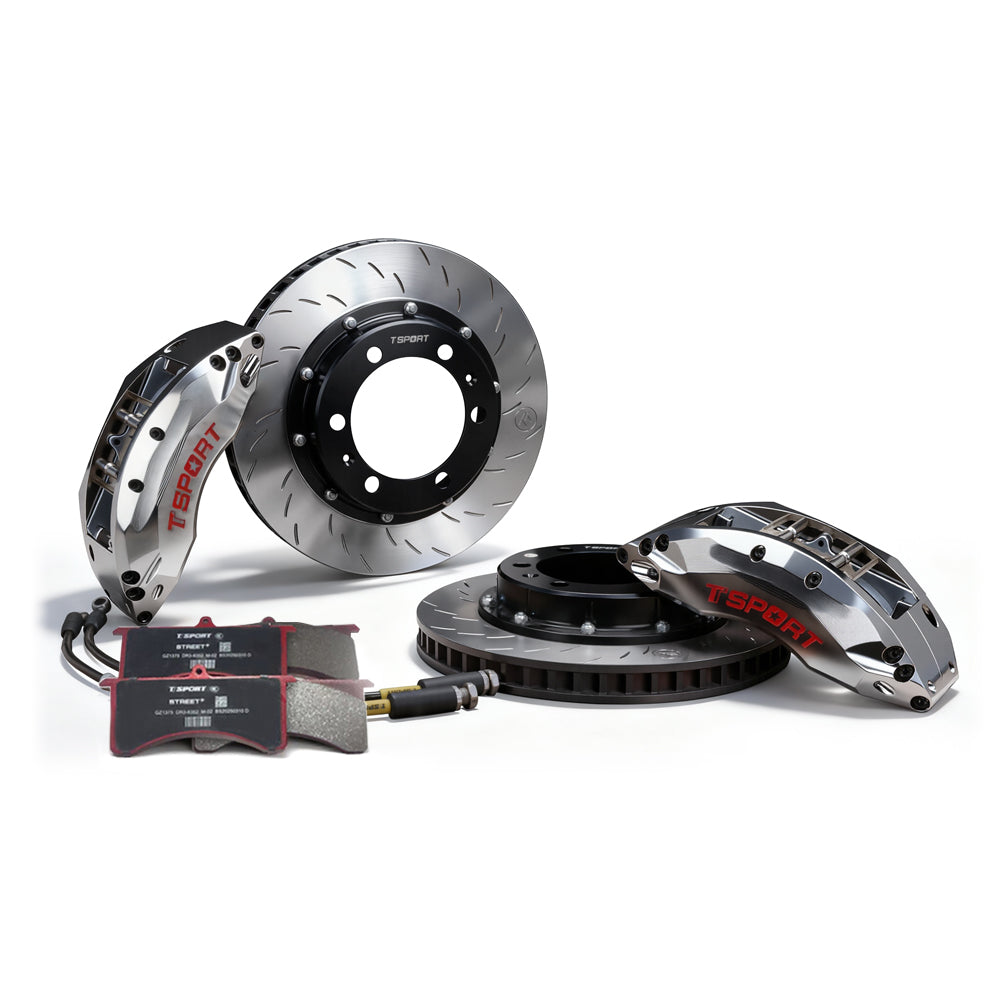


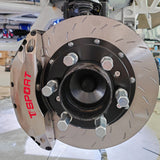


鍛造6ピストンキャリパー
2ピース鍛造アルミニウムボディ、ニッケルメッキ仕上げ、そして28 / 34 / 40 mmの異径ピストンが、プログレッシブな効きと安定したモジュレーションを実現します。
レーシングシリーズ · ラリー / 耐久 / ドリフト · フロントアクスル · 6ピストン
2ピース鍛造アルミニウム6ピストンキャリパー、Ø320 mm × 34 mmの2ピースウェーブスロットローター、0~600 °Cのレースパッド温度域を中心に構成されたフロントアクスル競技用ブレーキパッケージ。持続的な熱負荷下でも再現性のあるペダルフィールを必要とするチーム向けに設計されており、一発勝負のヒーローキットではありません。
これはステージラリー、ターマックラリー、耐久サーキットプログラム、ドリフトビルド、タイムアタック、HPDE車両など、繰り返しのブレーキングイベントでも安定した効きを必要とするモータースポーツ向けシステムです。ブーツレスのレーシングピストン、レースパッド、車両別のインストールワークフローは、ブレーキの点検・整備・慣らしを適切に行うチームを前提としています。
2ピース鍛造アルミニウムボディ、ニッケルメッキ仕上げ、そして28 / 34 / 40 mmの異径ピストンが、プログレッシブな効きと安定したモジュレーションを実現します。
キャリパー1基あたりの総ピストン面積55.6 cm²が、ラリー、耐久、ドリフト、サーキットでの使用において強力なフロントアクスルの制動力を発揮します。
Ø320 mm × 34 mmの熱処理高炭素鋳鉄ディスクとCNCアルミハットの組み合わせ。内部ベンチレーテッド、左右専用設計。
作動温度範囲0~600°C、平均μ≈0.38。パッドは鋳鉄/スチールローター専用で、競技使用前に適切なベッドインが必要です。
ブートレスのレーシングピストンは抵抗を低減し、定期的なシール点検、清掃、フルード交換を含むモータースポーツの整備間隔に対応します。
キャリパーブラケットの形状、ローターの取付方式、ブレーキラインの継手、ホイールクリアランスは、お客様のシャシーとホイール構成に基づいて確認されます。
| ブレーキキャリパー | |
|---|---|
| シリーズ | レーシングシリーズ — ラリー |
| モデル / 適合 | PB6 水冷式 |
| アクスル位置 | フロント |
| ピストン数 | 6ピストン |
| ピストンタイプ | ダストブーツなしのレーシングピストン |
| ピストン径 | 28 mm × 2 / 34 mm × 2 / 40 mm × 2 |
| キャリパー寸法 | 長さ280 mm × 幅169 mm × 高さ85 mm |
| ピストン総面積 | キャリパー1基あたり55.6 cm² |
| 製造プロセス | 2ピース鍛造アルミニウムボディ |
| 正味重量 | キャリパー1基あたり3.44 kg(パッド除く) |
| 表面仕上げ | ニッケルメッキ |
| 推奨ホイールサイズ | 17インチ以上 |
| 推奨ローターサイズ | Ø320 mm × 34 mm |
| ブレーキローター | |
| ローター素材 | 熱処理高炭素鋳鉄 |
| アクスル位置 | フロント |
| ローター寸法 | Ø320 mm × 34 mm |
| 構造 | 2ピースローターアッセンブリ |
| ベンチレーション | 内部ベンチレーション |
| 取り付け | 固定式またはフローティング式、ローターサイズと車両適用に応じて |
| ローター用ハット | CNC切削加工の高強度アルミ合金ローターキャップ |
| 方向性設計 | はい — 左右専用 |
| 表面パターン | ウェーブスロット |
| ブレーキパッド | |
| 対応ローター | 鋳鉄/スチール専用 |
| 作動温度 | 0~600℃ |
| 平均摩擦係数 | μ≈0.38、温度、ライン圧、ローターの状態により変動 |
| ベッドイン(慣らし)手順 | 競技使用前に必要 |
| ライン、ブラケット&サービス | |
| ブレーキライン構造 | 3層強化構造 |
| ブレーキライン材質 | PTFEインナーライナー / SUS304ステンレスブレード / PVCアウターシース |
| キャリパー取付 | 車両専用キャリパーブラケットによるラジアルマウント |
| キャリパーブラケット | CNC切削加工の炭素鋼ラジアルマウントキャリパーブラケット |
| ブレーキラインフィッティング | 車種別専用。キャリパー側・シャシー側のフィッティングは適合車種により異なる |
| スポーク最小クリアランス | 97 mm |
| ホイールクリアランス | 17インチ以上のホイールが必要。オフセットとリムプロファイルはキャリパーの外形に対して確認する必要があります。 |
| サービス要件 | 定期的なシール点検、清掃、フルード管理、および競技用サービスインターバルが必要です |
最小スポーククリアランスは97 mmです。オフセットとバレル形状は、PB6キャリパーの外形寸法(L 280 mm × W 169 mm × H 85 mm)に対して確認する必要があります。
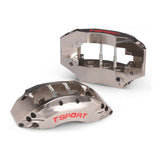
2 × PB6水冷式フロント2ピース鍛造6ピストンキャリパー(ニッケルメッキ仕上げ)。
両フロントキャリパー用ブレーキパッド(耐熱温度0~600 °C、鋳鉄/スチールローター用)。
2 × フロント2ピース内部ベンチレーテッドウェーブスロットローター、Ø320 mm × 34 mm、左右専用。
適切なフロントキャリパー位置とアライメントを実現する、車種専用CNC加工カーボンスチール製ラジアルキャリパーブラケット。
フロントハブ形状とローターオフセットに適合させたCNC加工高強度アルミ合金製ローターハット。
車種専用ステンレスメッシュフロントブレーキライン(PTFEインナーライナー、SUS304メッシュ、PVC外装シース)。
PB6水冷式フロントレーシングシステムはすべて、車両のフロントナックル、ハブ位置、ローターハットオフセット、ホイールバレル、スポーククリアランス、ブレーキラインの取り回し、フロントブレーキバイアスの目標値、サスペンション構成、シリーズ技術規則、そしてラリー、耐久、ドリフト、タイムアタック、HPDEでの使用を前提に設計されています。目標は汎用的なユニバーサルフィットではありません。目標は、お客様のシャシー形状に適合し、持続的な熱負荷下でも安定したペダルフィールを実現するフロントブレーキパッケージです。
車両、ホイールとオフセット、サスペンション構成、シリーズ技術規則、競技形式、フロントブレーキの挙動目標、ブレーキ冷却戦略、リアブレーキの組み合わせ、およびフロントアップライトがOEMかカスタムかを確認します。
OEMナックルの場合は、車両情報、ホイール仕様、ホイールオフセット、スポーク形状、サスペンション設定、シリーズ規定をご提供ください。カスタムアップライトの場合は、CADデータ、図面、ハブ面データ、ローター取付寸法、またはブラケット取付点の正確な測定値をご提供ください。
TTSPORTは、お見積もりと生産の前に、キャリパーブラケットの形状、ローターの取付方式、ローターアルミハットのオフセット、ブレーキラインの継手、ホイールクリアランス、パッドとローターの適合性、ならし(ベッドイン)要件、最終的な取付詳細を確認します。
ホイール、フロントナックル、ローターオフセット、シリーズ規定、ブレーキ冷却戦略、ブレーキラインの取り回しが適合するかご不明な場合は、 お問い合わせください ご注文前に、エンジニアリングチームが構成の詳細を確認します。
モータースポーツ用途の開示: ダストブーツなしのレーシングピストン、レースコンパウンドパッド、およびハイカーボンローターは、モータースポーツの整備間隔で維持される競技車両向けです。低メンテナンスのストリート走行には推奨されません。
耐久レース、ラリー、ドリフト、およびサーキットプログラムを対象としており、前軸に持続的な熱負荷がかかります。6ピストンフォージドキャリパー、2ピース Ø320 mm × 34 mm ウェーブスロットローター、およびレーシングパッドの作動温度域(0~600 °C)は、単発のアタックラップではなく、安定した繰り返し制動のために設計されています。
いいえ。PB6水冷はレーシングシリーズの仕様です。キャリパーブラケット、ローターの取り付け(固定式またはフローティング式)、およびブレーキラインの継手は、エンジニアリングワークフローを通じて車体ごとに確認されます。ご注文前に、車両、ホイール仕様、およびシリーズ規定をお送りください。
17インチ以上のホイールが必要で、スポーククリアランスは最低97mmです。オフセットとバレル形状は、お使いのホイールに合わせてキャリパーの外形(L 280 mm × W 169 mm × H 85 mm)に対して確認する必要があります。
ダストブーツのないレーシングピストンは、ドラッグを低減し、より高い持続的なキャリパー温度に耐えます。これらはモータースポーツの整備間隔(定期的なシール点検、清掃、フルード交換)を前提としています。日常のストリート使用には推奨されません。
キットには、0~600 °C 定格、平均 μ ≈ 0.38 のレースコンパウンドパッドと、熱処理済み高炭素鋳鉄製 Ø320 mm × 34 mm の2ピースローター(ウェーブスロット面、方向性ベーン付き)が付属します。パッドは鋳鉄/スチールローター専用です。
はい。競技使用前にパッド材をローターに均一に移着させ、摩擦層を安定させるため、適切なベッドインは必須です。ベッドインを省略すると、ジャダー、μのばらつき、パッド寿命の短縮を引き起こします。
車両(シャシー)、ホイール構成、サスペンション設定、希望シリーズをお送りください。TTSPORTがブラケット形状、ローター取付方式、ライン継手、クリアランスを確認した上でお見積もりします。
Brake Kits · Fitment · Installation · Care Guide
A brake kit is not just a pair of larger calipers. Calipers, rotors, pads, hoses, brackets, rotor hats, mounting hardware, brake fluid, wheel clearance, and bedding procedure all work together as one system.
This guide explains how to confirm the right TTSPORT brake kit before ordering, what to check before installation, and how to care for the system after installation.
Do not order a brake kit by vehicle name alone. The correct kit depends on the vehicle, axle position, wheel package, driving use, and brake system layout.
Wheel Clearance & Data Disclaimer: Technical fitment data applies strictly to rotor hats and mounting brackets—not wheel geometry. Wheel compatibility specs are provided for general reference only. Insufficient wheel clearance is not covered under warranty or data accuracy claims; if clearance is insufficient, wheel spacers must be added at the customer's discretion.
Different TTSPORT brake kit series use different hardware layouts. Always confirm what the kit includes before purchase.
Use direct-mount calipers and one-piece rotors where specified. These kits do not use rotor hats or caliper brackets unless the final product page clearly states otherwise.
Use separate friction rings and rotor hats. Hat offset, ring bolt pattern, hardware style, and rotor direction must be matched correctly.
May require bespoke brackets, rotor hats, brake lines, and engineering confirmation based on knuckle, hub, wheel, and competition use.
Require extra attention to wheel clearance, tire size, vehicle load, descent control, hose routing, and dust / water exposure.
Do not assume every brake kit includes the same parts. Package contents vary by product series, vehicle application, and final order configuration.
Before finalizing the order, review the kit specification carefully. Confirm the brake kit is matched to your vehicle and wheel setup, not only to the model name.
If any part is not listed in the final order or product page, do not assume it is included.
Inspect every component before installation. Do not modify, grind, drill, stretch, force, or space brake kit components to make them fit.
Safety: Brake kits affect braking force, hydraulic sealing, heat control, wheel clearance, and vehicle stability. Do not install the kit if fitment, torque, direction, clearance, or compatibility is unclear.
Correct installation is as important as the brake kit itself. A properly engineered kit can still perform poorly if installed with dirty mounting faces, incorrect torque, poor hose routing, or trapped air in the hydraulic system.
Verify caliper centering over the rotor and confirm even pad sweep across the friction surface.
Confirm left / right rotor direction if the rotor uses directional vanes or directional face pattern.
Check brake hose length and routing at full steering lock and full suspension travel. No twisting, rubbing, stretching, or kinking.
Check caliper-to-spoke and caliper-to-barrel clearance before road use. Wheel specs are for general estimation only—clearance issues are excluded from warranty/data claims and may require user-supplied wheel spacers.
Use the correct brake fluid type and bleed the system until pedal feel is firm and consistent.
Torque all brake hardware to the specified value. Do not reuse damaged, unknown, stretched, or corroded safety-critical fasteners.
Brake pads and rotors need a controlled bedding process before full performance is available. Bedding helps create an even transfer layer on the rotor surface, improving bite, pedal consistency, and vibration resistance.
Street pads, race pads, iron rotors, two-piece rotors, and carbon ceramic rotors may require different bedding procedures. Use the procedure supplied with the specific kit.
After installation and bedding, give the system a short break-in period before aggressive use. Pedal feel, pad contact, dust output, and noise may continue to settle after the first drives.
Brake kits need regular inspection, especially after track use, off-road use, towing, mountain driving, winter salt exposure, or any brake service.
Inspect pads, rotors, fluid level, and hose condition during normal service intervals. Prioritize quiet operation, smooth pedal feel, and even wear.
Check pad thickness, rotor surface condition, and fluid condition more often. Long descents create sustained heat even without track use.
Inspect for mud, sand, stone impact, hose abrasion, dust boot damage, and caliper contamination after trail use.
Inspect pads, rotors, fluid, and hardware before and after every event. Track heat shortens service intervals.
Check rear brake temperature, hydraulic handbrake behavior, pad wear, rotor cracking, and hardware condition frequently.
Use only compatible pads and approved bedding procedures. Inspect rotor surface condition carefully and avoid incompatible friction materials.
Do not continue driving if the brake system shows any of the following symptoms. Inspect the system or contact a qualified brake technician before using the vehicle again.
Send your vehicle details, brake kit series, wheel specs, driving use, photos, and any symptoms you notice. TTSPORT will help confirm fitment, installation checks, and the correct care path for your brake kit.
購読ありがとうございます!
このメールアドレスは登録されました!