



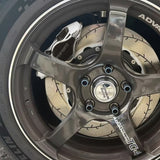


まずブレーキバランス
2ピストン、キャリパー面積30.95 cm²は、フロントBBKの制動力を補完しつつ、リアアクスルを過剰に制動したり早期ロックを招いたりしないよう設定。
レーシングシリーズ · サーキット · リアアクスル · 2ピストン
TR20は、リアブレーキの寄与が一貫して測定可能で調整可能であることを求めるチーム向けに設計された軽量2ピストン・リアレーシングキャリパーです。適切なモータースポーツパッケージでは、リアアクスルはピーク制動力だけで評価されるものではありません。フロントを支え、バイアスを維持し、パッドコンパウンドの使用可能ウィンドウを1セッション全体にわたって保つ必要があります。
TR20は、ダストブーツレスのレーシングピストンと2ピース鍛造アルミニウムボディを採用し、サーキット、ドリフト、ラリー、エンデュランスなど、高負荷制動の繰り返しにおいて熱的再現性とペダルフィールの安定性が重視される用途向けに設計されています。各キットは車種別のワークフローで製作され、リアのブレーキバランス、ローター構成、ブラケット形状、ブレーキラインの取り回し、ホイールクリアランスを生産前に確認します。
2ピストン、キャリパー面積30.95 cm²は、フロントBBKの制動力を補完しつつ、リアアクスルを過剰に制動したり早期ロックを招いたりしないよう設定。
フロントブレーキパッケージを支え、前後バランスを維持し、セッションを通じてリアの寄与を予測可能に保つ設計。
Ø330 mm × 25 mmの2ピースベンチレーテッドローターは、方向性ベーンによりセッション中のストップごとの温度を予測可能に保ちます。
ダストブーツレスのオープンピストン設計は、標準で最大600 °C、Option Bコンパウンドで最大750 °Cのレースパッド動作範囲に対応。
2ピース鍛造構造、交換可能なローターリング、標準的なレースパッド形状により、セッション間のパドックでの作業時間を短縮。
リアのブレーキバランス、ローター構成、ブラケット形状、ブレーキラインの取り回し、ホイールクリアランスは生産前に確認します。
| ブレーキキャリパー | ||
|---|---|---|
| シリーズ | レーシングシリーズ — サーキット | |
| モデル / 適合 | TR20 | |
| アクスル位置 | リア | |
| ピストン数 | 2ピストン | |
| ピストンタイプ | ダストブーツなしのレーシングピストン | |
| ピストン径 | 44.4 mm × 2 | |
| キャリパー寸法 | 182.3 mm × 148 mm × 71.6 mm | |
| ピストン総面積 | キャリパーあたり30.95 cm²(全ピストン合計) | |
| 製造プロセス | 2ピース鍛造アルミニウムボディ | |
| 正味重量 | キャリパーあたり1.73 kg(パッド除く) | |
| 表面仕上げ | ニッケルメッキ | |
| カスタムカラー | このキャリパーシリーズでは選択不可 | |
| 推奨ホイールサイズ | 17インチ以上 | |
| 推奨ローターサイズ | Ø330 mm × 25 mm | |
| ブレーキローターオプション | ||
| ローターオプション | 標準 | Option B |
| ローター素材 | 熱処理高炭素鋳鉄 | レーシンググレード熱処理高炭素鋳鉄 |
| アクスル位置 | リア | リア |
| ローター寸法 | Ø330 mm × 25 mm | Ø330 mm × 25 mm |
| 構造 | 2ピースローターアッセンブリ | 2ピースローターアッセンブリ |
| ベンチレーション | 内部ベンチレーション | 内部ベンチレーション |
| ローター用ハット | 車種別アルミローターキャップ | 車種別アルミローターキャップ |
| ローター取付方式 | 固定式またはフローティング式、ローターサイズと車両適用に応じて | 固定式またはフローティング式、ローターサイズと車両適用に応じて |
| 方向性設計 | はい — 左右専用 | はい — 左右専用 |
| ローター表面パターン | 曲面スリット / グレインスロット / ウェーブスロット / ドリルド&スリット | ウェーブスロット |
| 推奨用途 | サーキット、ドリフト、ラリー、耐久向けの後軸制御用スチールローター仕様 | より高いピークエネルギーと後輪ブレーキ使用量の多いイベント向けレーシングスチールローター仕様 |
| ブレーキパッドオプション | ||
| パッドオプション | 標準 | Option B |
| 対応ローター材質 | アイアン/スチールローター専用 | アイアン/スチールローター専用 |
| 使用温度範囲 | 0~600℃ | 0–750 °C |
| 平均摩擦係数 | μ ≈ 0.38、温度、ライン圧、ローター状態により変動 | μ ≈ 0.45、温度、ライン圧、ローター状態により変動 |
| 推奨用途 | トラック、ドリフト、ラリー、バランスの取れたモータースポーツパッケージにおける後輪ブレーキ貢献 | 耐久、ダウンヒルラリーステージ、激しいドリフト進入、より高いピークエネルギーイベント |
| ライン、ブラケット&サービス | ||
| ブレーキライン構造 | 3層補強構造 | |
| ブレーキライン材質 | PTFEインナーライナー/SUS304ステンレススチールブレード/PVC保護外装シース | |
| キャリパー取付 | 車両専用キャリパーブラケットによるラジアルマウント | |
| キャリパーブラケット | 車両専用ラジアルキャリパーブラケットはビルドワークフロー中に確認 | |
| ローター用ハット | 後輪ハブ形状とローターオフセットに合わせたアプリケーション専用アルミローターキャップ | |
| ブレーキラインフィッティング | 車種別専用。キャリパー側・シャシー側のフィッティングは適合車種により異なる | |
| ホイールクリアランス | 17インチ以上のホイール、レースホイールセットは生産前にスポーク形状を確認 | |
| ローター整備 | 2ピースローター設計により、整備可能な場合はアルミキャップを保持したままフリクションリングを交換可能 | |
| ベッドイン(慣らし)手順 | システムをレースペースまで追い込む前に必須 | |
オプションBは、標準パッドが使用範囲を超える耐久、ダウンヒルラリーステージ、激しいドリフト進入などのより高いピークエネルギーイベント向けです。キャリパー仕上げはニッケルメッキで、このキャリパーラインではカラーカスタマイズはできません。
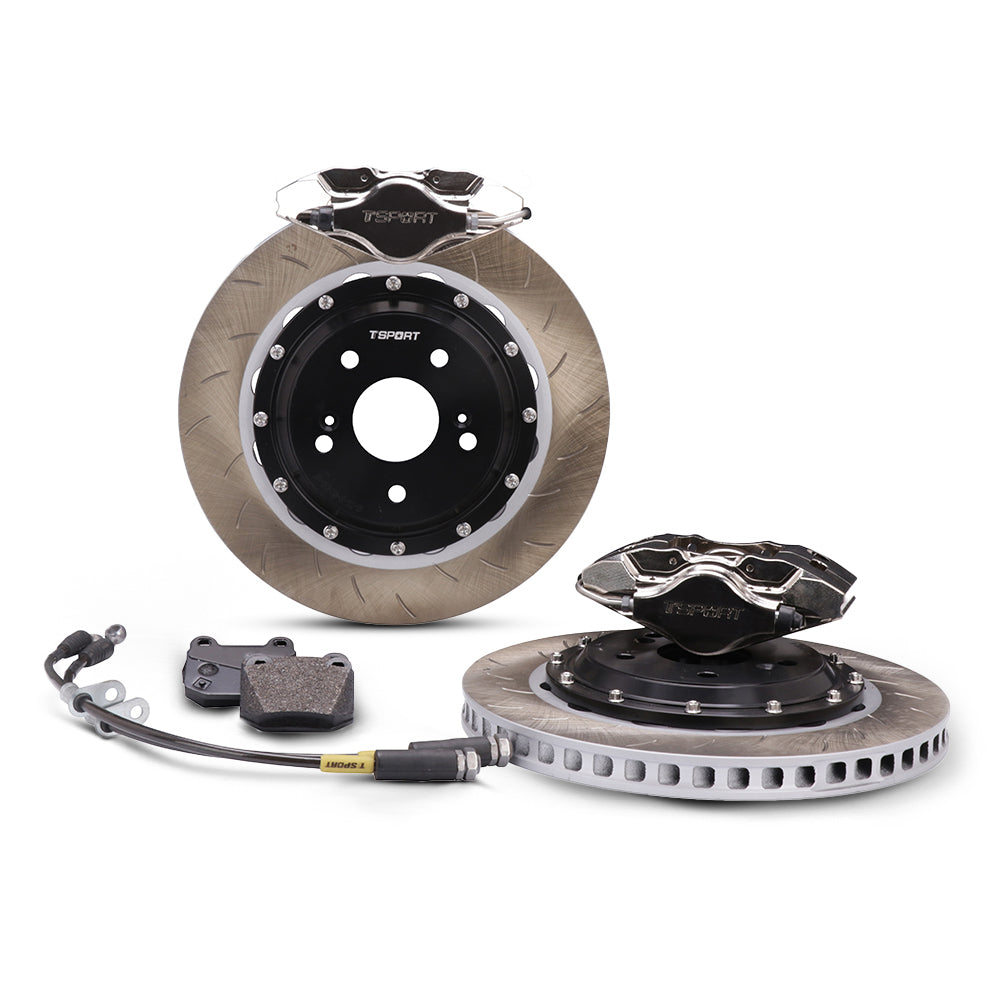
TR20 後輪用2ピース鍛造2ピストンキャリパー × 2、ニッケルメッキ仕上げ。
両後輪キャリパー用ブレーキパッド、標準0~600°CまたはオプションB 0~750°Cコンパウンドから選択。
2ピース内部ベント後輪ローター × 2、Ø330 mm × 25 mm、左右専用。
車種専用ラジアルキャリパーブラケット。リアキャリパーの正確な位置とアライメントを確保します。
車種適合のアルミ製ローターハット。リアハブ位置とローターオフセットに合わせて専用設計。
PTFEインナーライナー、SUS304ステンレススチールブレード、PVC保護アウターシースを採用した3層構造ステンレスメッシュリアブレーキライン。
TR20リアレーシングシステムはすべて、車両のリアナックル、ハブ位置、ローターハットオフセット、ホイールバレル、スポーククリアランス、ブレーキラインの取り回し、フロントBBKとの組み合わせ、リアバイアス目標、アクスルの役割、想定されるモータースポーツ用途に基づいて設計されています。目標は汎用的なユニバーサルフィットではなく、フロントアクスルを支え、バイアスを維持し、ドライバーにセッション全体を通して再現性のあるペダルフィールを与えるリアブレーキパッケージです。
車両、リアサスペンションとナックルの構成、アクスルの役割、現在のフロントブレーキ構成、目標バイアス、競技用途、ホイールパッケージ、タイヤコンパウンド、そしてOEMまたはカスタムのリアアップライトを使用しているかを確認します。
OEMナックルの場合は、車両情報、現在のフロントブレーキ構成、ホイールサイズ、ホイール仕様、使用目的をご提供ください。カスタムリアアップライトの場合は、CADファイル、技術図面、ハブフェースデータ、ローター取付寸法、または正確なブラケット取付点の測定値をご提供ください。
TTSPORTは、製作を開始する前に、リアバイアス目標、ローターオプション、パッドコンパウンド、車種専用キャリパーブラケット形状、ローターハットオフセット、ブレーキラインの取り回し、ホイールクリアランスを確認します。
ホイール、リアナックル、フロントBBKとの組み合わせ、ローターオフセット、ブレーキラインの取り回し、リアバイアスの目標値が適合するか不明な場合は、 お問い合わせください ご注文前にご連絡ください。エンジニアリングチームが構成の詳細を確認いたします。
TR20はリア専用キャリパーです。2ピストン、30.95 cm²のプラットフォームで、リアアクスルを過剰制動することなく、より大型のフロントBBKとのバランスを取るように設計されています。
Ø330 mm × 25 mm、2ピース、内部ベンチレーテッド、左右方向別仕様。標準の高炭素鋼またはレーシンググレードの熱処理鋼から選択できます。
標準パッドは0~600 °Cでμ ≈ 0.38。オプションBは耐久、ラリー、ハードなドリフト走行に対応するため、使用温度域を0~750 °C、μ ≈ 0.45まで拡大します。
17インチ以上のホイールが必要です。スポーク形状は、生産開始前のビルドワークフローにおいてキャリパーの外形と照合して確認されます。
いいえ。TR20はニッケルメッキ仕様で出荷され、このレースラインではカラーのカスタマイズは提供していません。
はい。システムをレースペースまで引き上げる前に、パッドの移着層を定着させる適切なベッドイン(慣らし)が必要です。
車両、現在のフロントブレーキ構成、ホイールサイズ、使用目的をお送りください。弊社エンジニアリングチームが、ビルド開始前にローターオプション、パッドコンパウンド、ブラケットパッケージ、ローターキャップのオフセット、ブレーキラインの取り回し、ホイールクリアランスを確認します。
Brake Kits · Fitment · Installation · Care Guide
A brake kit is not just a pair of larger calipers. Calipers, rotors, pads, hoses, brackets, rotor hats, mounting hardware, brake fluid, wheel clearance, and bedding procedure all work together as one system.
This guide explains how to confirm the right TTSPORT brake kit before ordering, what to check before installation, and how to care for the system after installation.
Do not order a brake kit by vehicle name alone. The correct kit depends on the vehicle, axle position, wheel package, driving use, and brake system layout.
Wheel Clearance & Data Disclaimer: Technical fitment data applies strictly to rotor hats and mounting brackets—not wheel geometry. Wheel compatibility specs are provided for general reference only. Insufficient wheel clearance is not covered under warranty or data accuracy claims; if clearance is insufficient, wheel spacers must be added at the customer's discretion.
Different TTSPORT brake kit series use different hardware layouts. Always confirm what the kit includes before purchase.
Use direct-mount calipers and one-piece rotors where specified. These kits do not use rotor hats or caliper brackets unless the final product page clearly states otherwise.
Use separate friction rings and rotor hats. Hat offset, ring bolt pattern, hardware style, and rotor direction must be matched correctly.
May require bespoke brackets, rotor hats, brake lines, and engineering confirmation based on knuckle, hub, wheel, and competition use.
Require extra attention to wheel clearance, tire size, vehicle load, descent control, hose routing, and dust / water exposure.
Do not assume every brake kit includes the same parts. Package contents vary by product series, vehicle application, and final order configuration.
Before finalizing the order, review the kit specification carefully. Confirm the brake kit is matched to your vehicle and wheel setup, not only to the model name.
If any part is not listed in the final order or product page, do not assume it is included.
Inspect every component before installation. Do not modify, grind, drill, stretch, force, or space brake kit components to make them fit.
Safety: Brake kits affect braking force, hydraulic sealing, heat control, wheel clearance, and vehicle stability. Do not install the kit if fitment, torque, direction, clearance, or compatibility is unclear.
Correct installation is as important as the brake kit itself. A properly engineered kit can still perform poorly if installed with dirty mounting faces, incorrect torque, poor hose routing, or trapped air in the hydraulic system.
Verify caliper centering over the rotor and confirm even pad sweep across the friction surface.
Confirm left / right rotor direction if the rotor uses directional vanes or directional face pattern.
Check brake hose length and routing at full steering lock and full suspension travel. No twisting, rubbing, stretching, or kinking.
Check caliper-to-spoke and caliper-to-barrel clearance before road use. Wheel specs are for general estimation only—clearance issues are excluded from warranty/data claims and may require user-supplied wheel spacers.
Use the correct brake fluid type and bleed the system until pedal feel is firm and consistent.
Torque all brake hardware to the specified value. Do not reuse damaged, unknown, stretched, or corroded safety-critical fasteners.
Brake pads and rotors need a controlled bedding process before full performance is available. Bedding helps create an even transfer layer on the rotor surface, improving bite, pedal consistency, and vibration resistance.
Street pads, race pads, iron rotors, two-piece rotors, and carbon ceramic rotors may require different bedding procedures. Use the procedure supplied with the specific kit.
After installation and bedding, give the system a short break-in period before aggressive use. Pedal feel, pad contact, dust output, and noise may continue to settle after the first drives.
Brake kits need regular inspection, especially after track use, off-road use, towing, mountain driving, winter salt exposure, or any brake service.
Inspect pads, rotors, fluid level, and hose condition during normal service intervals. Prioritize quiet operation, smooth pedal feel, and even wear.
Check pad thickness, rotor surface condition, and fluid condition more often. Long descents create sustained heat even without track use.
Inspect for mud, sand, stone impact, hose abrasion, dust boot damage, and caliper contamination after trail use.
Inspect pads, rotors, fluid, and hardware before and after every event. Track heat shortens service intervals.
Check rear brake temperature, hydraulic handbrake behavior, pad wear, rotor cracking, and hardware condition frequently.
Use only compatible pads and approved bedding procedures. Inspect rotor surface condition carefully and avoid incompatible friction materials.
Do not continue driving if the brake system shows any of the following symptoms. Inspect the system or contact a qualified brake technician before using the vehicle again.
Send your vehicle details, brake kit series, wheel specs, driving use, photos, and any symptoms you notice. TTSPORT will help confirm fitment, installation checks, and the correct care path for your brake kit.
購読ありがとうございます!
このメールアドレスは登録されました!