


Strada
Risposta silenziosa, a bassa polvere, forte risposta a freddo. Ideale per la guida quotidiana di veicoli equipaggiati con CCB.

Email: sales@ttsport-racing.com
Valuta
 AED
AED
 AFN
AFN
 ALL
ALL
 AMD
AMD
 ANG
ANG
 AUD
AUD
 AWG
AWG
 AZN
AZN
 BAM
BAM
 BBD
BBD
 BDT
BDT
 BIF
BIF
 BND
BND
 BOB
BOB
 BSD
BSD
 BWP
BWP
 BZD
BZD
 CAD
CAD
 CDF
CDF
 CHF
CHF
 CNY
CNY
 CRC
CRC
 CVE
CVE
 CZK
CZK
 DJF
DJF
 DKK
DKK
 DOP
DOP
 DZD
DZD
 EGP
EGP
 ETB
ETB
 EUR
EUR
 FJD
FJD
 FKP
FKP
 GBP
GBP
 GMD
GMD
 GNF
GNF
 GTQ
GTQ
 GYD
GYD
 HKD
HKD
 HNL
HNL
 HUF
HUF
 IDR
IDR
 ILS
ILS
 INR
INR
 ISK
ISK
 JMD
JMD
 JPY
JPY
 KES
KES
 KGS
KGS
 KHR
KHR
 KMF
KMF
 KRW
KRW
 KYD
KYD
 KZT
KZT
 LAK
LAK
 LBP
LBP
 LKR
LKR
 MAD
MAD
 MDL
MDL
 MKD
MKD
 MMK
MMK
 MNT
MNT
 MOP
MOP
 MUR
MUR
 MVR
MVR
 MWK
MWK
 MYR
MYR
 NGN
NGN
 NIO
NIO
 NPR
NPR
 NZD
NZD
 PEN
PEN
 PGK
PGK
 PHP
PHP
 PKR
PKR
 PLN
PLN
 PYG
PYG
 QAR
QAR
 RON
RON
 RSD
RSD
 RWF
RWF
 SAR
SAR
 SBD
SBD
 SEK
SEK
 SGD
SGD
 SHP
SHP
 SLL
SLL
 STD
STD
 THB
THB
 TJS
TJS
 TOP
TOP
 TTD
TTD
 TWD
TWD
 TZS
TZS
 UAH
UAH
 UGX
UGX
 USD
USD
 UYU
UYU
 UZS
UZS
 VND
VND
 VUV
VUV
 WST
WST
 XAF
XAF
 XCD
XOF
XPF
XCD
XOF
XPF
 YER
YER
Pastiglie dei freni · Composto M-03 · Solo disco in ceramica di carbonio
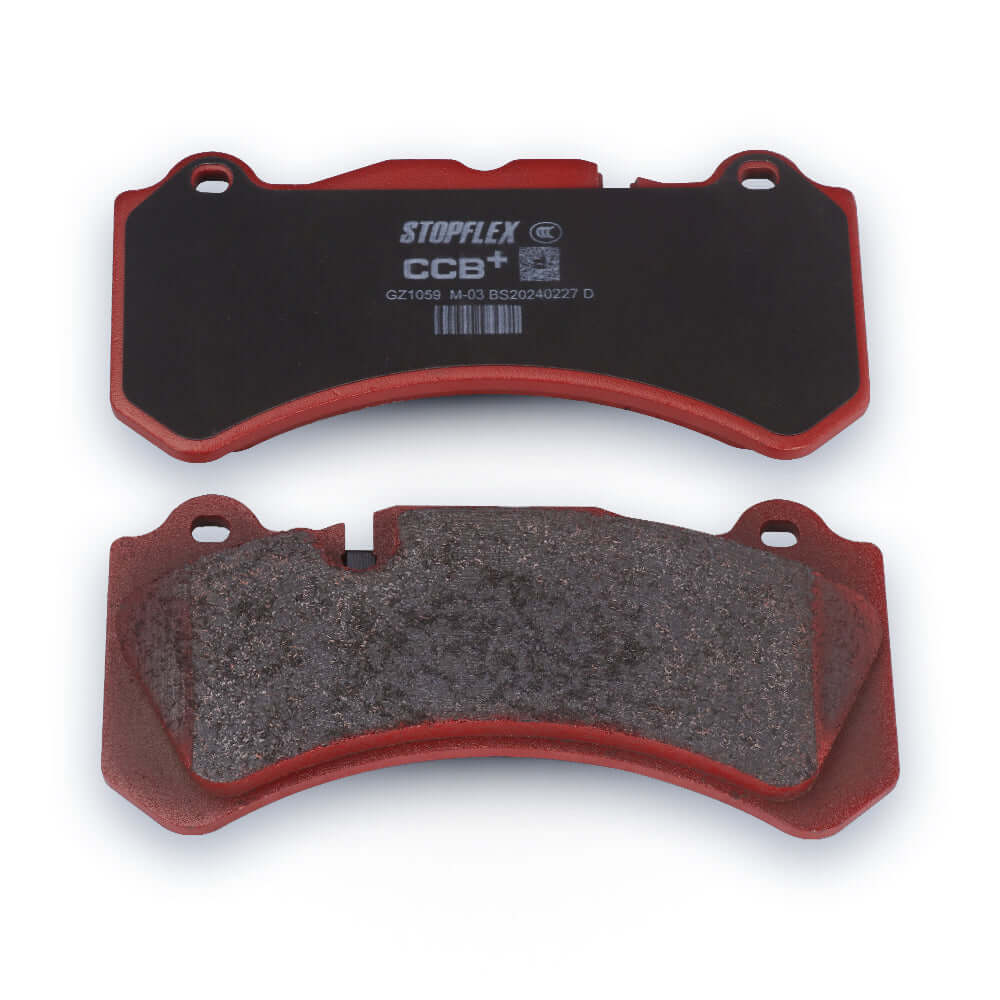
Il TTSPORT M-03 è un composto di attrito a resina a basso contenuto di metallo, progettato specificamente per dischi freno in ceramica di carbonio. Offre una presa sicura a freddo, una risposta stabile ad alte temperature e un pedale controllato, rimanendo compatibile con il comportamento di attrito richiesto dai dischi CCB.
Solo per dischi CCB. M-03 è formulato per dischi freno in ceramica di carbonio. Non installare su dischi convenzionali in ghisa o acciaio, a meno che TTSPORT non confermi la compatibilità per la tua applicazione specifica.
| Composto delle pastiglie freno | |
|---|---|
| Serie | M-03 |
| Tipo di prodotto | Pastiglie freno / composto di attrito |
| Tipo di composizione | Resina a basso contenuto di metallo |
| Compatibilità con i dischi | Solo dischi freno in ceramica di carbonio |
| Non destinato a | Dischi convenzionali in ghisa o acciaio, a meno che TTSPORT non confermi separatamente |
| Uso previsto | Guida su strada e in pista con veicoli equipaggiati con CCB |
| Primo mordente a freddo | Forte, immediato |
| Profilo di polvere | Basso a moderato |
| Profilo di rumore | Basso sotto uso normale |
| Sensazione del pedale | Lineare, modulabile |
| Valutazione per pista | Nessuna valutazione dedicata a giornate in pista o endurance dichiarata |
Non viene dichiarata alcuna valutazione per giornate in pista o endurance per questa composizione. Per un uso prolungato in circuito chiuso, contatta TTSPORT per una raccomandazione di composito specifica per il tuo sistema CCB.
Questa pagina prodotto descrive solo le pastiglie freno. Pinze, dischi, tubi del freno, liquido freni, staffe, copri-dischi, sensori di usura e hardware di installazione non sono inclusi a meno che non siano specificati separatamente nell'ordine finale.
Risposta silenziosa, a bassa polvere, forte risposta a freddo. Ideale per la guida quotidiana di veicoli equipaggiati con CCB.
Attrito stabile e pedalata coerente durante ripetuti arresti energici su strade secondarie e in canyon.
Non classificata come composto specifico per pista. Per uso in circuito chiuso, richiedi una raccomandazione di tipo pista per CCB.
I dischi in ceramica di carbonio trasferiscono il film di attrito in modo diverso rispetto ai dischi in ghisa. È preferibile un rodaggio leggero e uniforme rispetto a cicli di calore aggressivi, a meno che TTSPORT non specifichi un processo diverso per il tuo sistema CCB.
Hai bisogno di verificare la compatibilità tra pinza e disco CCB? Invia il modello del veicolo, l'anno, le foto della pinza, la forma della pastiglia e i dettagli del disco. TTSPORT può verificare la corretta applicazione di M-03 prima di ordinare.
Importante: L'uso della pastiglia sbagliata su un rotore in ceramica di carbonio può danneggiare la superficie di attrito e ridurre le prestazioni di frenata. Confermare il materiale del rotore, la forma della pastiglia e l'adattamento alla pinza prima dell'installazione.
No. M-03 è formulato per rotori in ceramica di carbonio. Non è consigliato utilizzarlo su rotori in ferro o acciaio convenzionali, a meno che TTSPORT non confermi la compatibilità per la tua applicazione specifica.
No. M-03 è una mescola da strada e ad alte prestazioni per sistemi CCB. Per uso prolungato in pista, contatta TTSPORT per una raccomandazione specifica per i sistemi CCB da pista.
Aspettarsi polvere da bassa a moderata. M-03 è progettato per produrre meno polvere sulle ruote rispetto a mescole metallici CCB più aggressive, mantenendo una forte presa a freddo.
No. La mescola è progettata per una forte presa a freddo fin dal primo stop, con risposta stabile all'aumentare della temperatura durante la guida normale su strada e ad alte prestazioni.
Invia a TTSPORT il tuo veicolo, anno, dettagli del pinza originale o BBK, forma della pastiglia, stile del supporto posteriore, spessore e configurazione del sensore di usura. TTSPORT verificherà l'adattamento prima di effettuare l'ordine.
Invia il tuo veicolo, anno, dettagli del rotore CCB, modello della pinza, forma della pastiglia, supporto posteriore e configurazione del sensore. TTSPORT ti aiuterà a confermare la corretta applicazione della pastiglia freno M-03 prima di ordinare.
Brake Pads · Compound Selection · Bedding · Care Guide
Brake pads are not universal wear parts. Pad shape, compound, rotor material, caliper type, temperature window, noise tolerance, dust expectation, and driving use all matter. The right pad should match how the vehicle is actually driven, not just what fits inside the caliper.
This guide explains how to choose, install, bed in, and inspect TTSPORT brake pads so the compound works as intended.
Start with the exact vehicle and brake setup. A pad can look close and still have the wrong backing plate, thickness, sensor slot, or compound for the rotor material.
Do not order brake pads by vehicle name alone if the car has a big brake kit, swapped calipers, aftermarket rotors, or carbon ceramic brakes.
Be honest about the use case. A quiet daily pad and a track pad solve different problems. Choosing too aggressive a compound for street use can create noise, dust, poor cold bite, and unnecessary rotor wear. Choosing too mild a compound for track use can cause fade, glazing, and unstable pedal feel.
Prioritize cold bite, low noise, low dust, smooth release, and rotor-friendly wear. Ceramic or comfort-focused street compounds are usually the best fit.
Choose a compound with stronger bite and better heat tolerance while still keeping acceptable dust, noise, and cold-stop behavior.
Use a high-temperature compound designed for repeated hard braking. Expect more noise, dust, pad wear, and rotor wear.
Select based on surface, vehicle weight, tire grip, brake cooling, stint length, and whether consistent release or high initial bite matters more.
Pads and rotors work as a friction pair. The wrong pad can create poor bite, high wear, noise, uneven deposits, or rotor damage.
Important: Carbon ceramic rotors require compatible pad compounds and correct bedding. The wrong pad can damage the friction surface and reduce braking performance.
Every brake pad compound has a working temperature range. Street compounds are designed to work from cold and stay quiet during normal road use. Track compounds are designed to stay stable at higher temperatures, but may feel weak, noisy, or abrasive when cold.
Use the specific TTSPORT compound data for the final decision. Temperature range, friction coefficient, dust, noise, and rotor wear vary by compound.
Friction coefficient, often shown as μ, describes how strongly the pad grips the rotor under defined test conditions. Higher μ usually means stronger bite, but not automatically better street behavior.
Good for track, time attack, and late braking. Can feel grabby or noisy on the street.
Best for daily and performance street use where smooth modulation and predictable release matter.
Some compounds build bite as heat increases. Good for hard driving, but the driver must manage pedal pressure carefully.
Useful for trail braking, low-speed control, wet roads, off-road work, and mixed driving conditions.
There is no free compound. Higher heat capacity and stronger bite usually come with more dust, more noise, faster pad wear, or faster rotor wear. Low-dust, quiet pads are better for comfort but are not built for sustained track heat.
Brake pad installation should begin with inspection. New pads will not fix a damaged rotor, sticking caliper, seized guide pin, or contaminated brake system.
Safety: Brake pad installation should be completed by a qualified technician. Confirm pad fitment, rotor material, caliper condition, and brake-system safety before driving.
Bedding is required for stable bite, quiet operation, and consistent pedal feel. It creates a controlled transfer layer between the pad and rotor. Follow the exact TTSPORT compound procedure when supplied.
Street pads, race pads, and carbon ceramic pads may require different bedding methods. Do not use one generic bedding process for every compound.
Brake pads may continue to settle after the first bedding cycle. Pedal feel, dust output, and minor noise can change during the first drives.
Brake pads should be inspected regularly, especially after hard driving, mountain roads, towing, track use, winter salt exposure, or off-road use.
Do not continue driving if the brake system shows any of the following symptoms. Inspect the system or contact a qualified brake technician before using the vehicle again.
Send your vehicle details, caliper model, rotor material, pad shape, driving use, and any symptoms you notice. TTSPORT will help confirm the correct brake pad compound and care path for your setup.
Grazie per aver sottoscritto!
Questa email è stata registrata!