

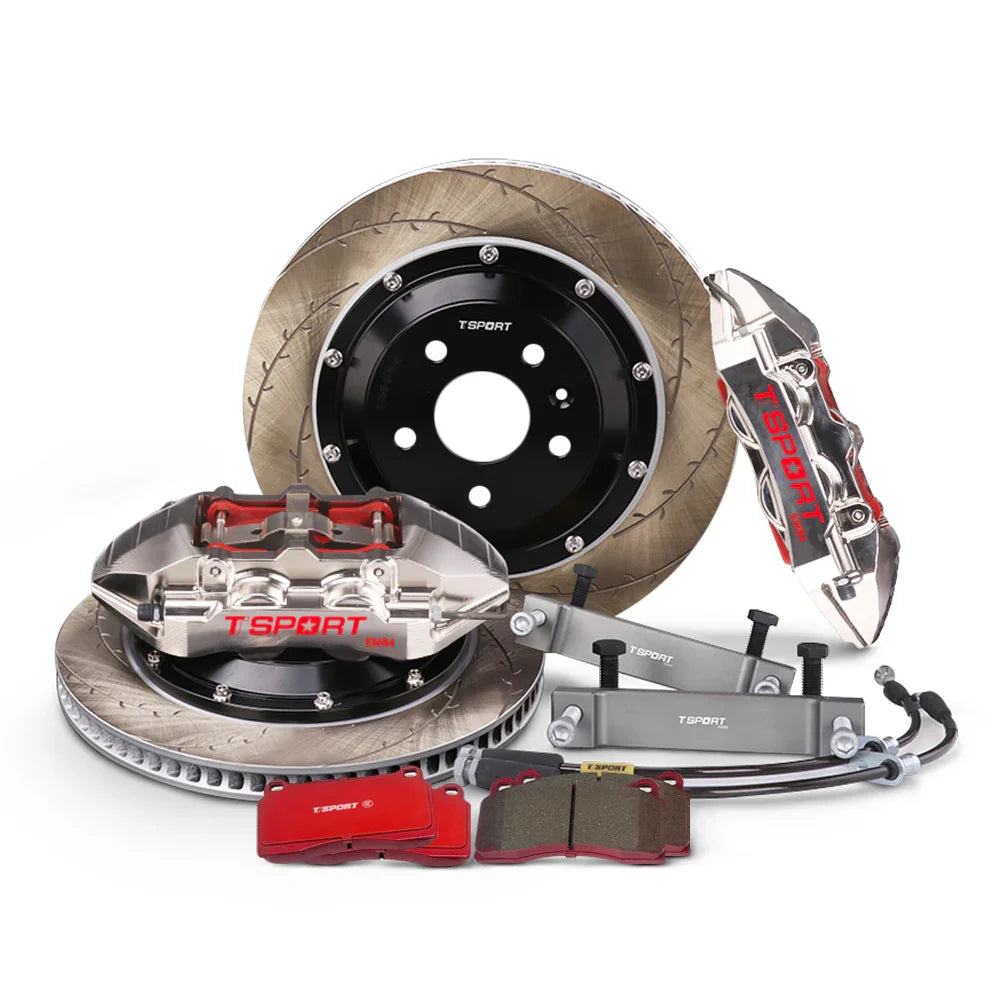




كالبر أحادي الكتلة مطروق
هيكل ألومنيوم من قطعة واحدة لصلابة عالية ومرونة ضئيلة تحت الحمل القوي على المحور الخلفي.
سلسلة مونو · المحور الخلفي · طقم فرامل كبير مطروق أحادي الكتلة
طقم الفرامل الكبير مونو EMB4 مخصص للمحور الخلفي، صُمم ليوازن ترقية الفرامل الأمامية مع توزيع كبح ثابت، وتعديل دواسة نظيف، وقوة إيقاف متكررة. يعمل فرجار من الألومنيوم المطروق أحادي الكتلة بأربعة مكابس على دفع مكابس بقطر 30 مم للضغط على أقراص ثنائية القطعة بسمك 28 مم وبأقطار 345 أو 355 أو 380 مم — مع خيارات من الفولاذ أو الكربون-سيراميك لتناسب سيارتك.
هيكل ألومنيوم من قطعة واحدة لصلابة عالية ومرونة ضئيلة تحت الحمل القوي على المحور الخلفي.
مكابس 30 مم × 4 بمساحة إجمالية للمكبس 28.3 سم² لكل كالبر لتوزيع متساوٍ على الوسادات.
المكابس ثنائية القطعة تقلل انتقال الحرارة من الوسادة إلى السائل، مما يحسن إحساس الدواسة أثناء التوقفات المتكررة.
مصمم ليتناسب مع طقم فرامل أمامي أكبر دون إرهاق المحور الخلفي.
ثلاثة أقطار لأقراص الفرامل وخلوص عجلات 18 بوصة فأكثر لمجموعة واسعة من المركبات.
| فرجار الفرامل | ||
|---|---|---|
| الفئة | السلسلة الأحادية | |
| الموديل / التطبيق | EMB4 | |
| موضع المحور | خلفي | |
| عدد المكابس | أربعة مكابس | |
| نوع المكبس | مكابس من قطعتين معزولة حرارياً، بدون أغطية غبار | |
| قطر المكبس | 30 مم × 4 | |
| المساحة الإجمالية للمكابس | 28.3 سم² لكل فرجار | |
| أبعاد الماسك | الطول 268 × العرض 164 × الارتفاع 68 مم | |
| عملية التصنيع | جسم من الألومنيوم المطروق أحادي الكتلة | |
| الوزن الصافي | 2.55 كجم لكل فرجار، بدون تيل الفرامل | |
| تشطيب السطح | مطلي بالنيكل | |
| مقاس العجلة الموصى به | 18 بوصة أو أكبر | |
| مقاس القرص الموصى به | Ø345–380 مم × 28 مم | |
| خيارات أقراص الفرامل | ||
| خيار القرص | فولاذ (الخيار أ) | كربون-سيراميك (الخيار ب) |
| مادة القرص | حديد زهر عالي الكربون معالج حراريًا | مركب الكربون-سيراميك |
| موضع المحور | خلفي | خلفي |
| أبعاد القرص | Ø345 / 355 / 380 مم × 28 مم | Ø380 مم × 28 مم |
| البناء | تجميع من قطعتين | تجميع من قطعتين |
| التهوية | مُهوّى داخليًا | مُهوّى داخليًا |
| تركيب القرص | ثابت أو عائم، حسب حجم القرص والتطبيق | عائم |
| تصميم اتجاهي | نعم — خاص باليسار/اليمين | نعم — خاص باليسار/اليمين |
| نمط سطح القرص | شق منحني / شق حبيبي / شق متموج / مثقوب ومشقوق | مثقب بشكل متقاطع |
| خيارات تيل الفرامل | ||
| خيار التيل | لأقراص الفولاذ | لأقراص الكربون سيراميك |
| مادة القرص المتوافقة | أقراص حديد/فولاذ فقط | أقراص كربون-سيراميك فقط |
| نطاق درجة حرارة التشغيل | 0–600 درجة مئوية | 0–700 درجة مئوية |
| معامل الاحتكاك المتوسط | μ ≈ 0.38 | μ ≈ 0.45 |
| خطوط | ||
| بنية خط الفرامل | بنية من ثلاث طبقات | |
| مادة خط الفرامل | بطانة داخلية من PTFE / جديلة من الفولاذ المقاوم للصدأ SUS304 / غلاف خارجي من PVC | |
| وظيفة خط الفرامل | يقلل تمدد خط الفرامل للحصول على دواسة أكثر صلابة | |
| وصلات خط الفرامل | خاص بالمركبة على جانبي الفرجار والهيكل | |
| الأقواس | ||
| عملية تصنيع قبعة القرص | مُصنَّع باستخدام التحكم الرقمي CNC | |
| مادة قبعة القرص | سبيكة الألومنيوم عالية القوة | |
| عملية تصنيع حامل الكاليبر | مُصنَّع باستخدام التحكم الرقمي CNC | |
| مادة حامل الكاليبر | فولاذ كربوني | |
| نوع تركيب الكاليبر | تركيب شعاعي مع حوامل مخصصة للمركبة | |
| التوافق والتركيب | ||
| الحد الأدنى لخلوص الأذرع | 101 مم | |
| مقاس العجلة الموصى به | 18 بوصة أو أكبر | |
| اختيار قطر قرص الفرامل | 345، 355، أو 380 مم، يتم اختيارها حسب تطبيق المركبة وخلوص العجلة | |
| إجراء تليين الفرامل | مطلوب قبل القيادة العنيفة | |
يختلف الاحتكاك باختلاف درجة الحرارة وضغط الخط وحالة القرص. يجب دائمًا مطابقة الوسادات مع مادة القرص.
كاليبران خلفيان من طراز EMB4.
وسادات مطابقة لكلا الكاليبرين الخلفيين.
أقراص من قطعتين بالحجم والمادة المختارين.
حوامل فولاذية كربونية خاصة بالمركبة، مصنعة باستخدام CNC.
محاور ألمنيوم مصنعة باستخدام CNC.
خطوط مكابح مضفرة من الفولاذ المقاوم للصدأ.
تأكد من الخلوص الداخلي للجنط وقطر القرص ومدى توافق المركبة قبل الطلب. استخدم القالب المرفق أو تواصل معنا مع تفاصيل العجلة والمركبة.

يلزم استخدام عجلات مقاس 18 بوصة أو أكبر.

يتطلب نظام EMB4 خلوصًا لا يقل عن 101 مم بين أذرع العجلة. وقد تتطلب الأقراص الأكبر حجمًا وتصميمات العجلات الخاصة خلوصًا إضافيًا.

تأكد من حجم القرص، وتوافر الحامل، ووصلات خط الفرامل، وتوزيع الفرامل الخلفية لسيارتك قبل الطلب.
صُمم لموازنة مجموعة الفرامل الأمامية الأكبر (BBK) وتوفير توزيع خلفي نظيف دون إجهاد الهيكل.
للمحور الخلفي فقط. صُمم لموازنة طقم الفرامل الأمامي الأكبر وتوفير توزيع خلفي نظيف دون إرباك الهيكل.
تتوفر أقراص الفولاذ بقياسات Ø345 و355 و380 مم × 28 مم. أما الكربون سيراميك فيتوفر بقياس Ø380 مم × 28 مم. جميعها مكونة من قطعتين، مهواة داخليًا، واتجاهية.
مقاس 18 بوصة أو أكبر، مع خلوص للأذرع لا يقل عن 101 مم. قد تتطلب الأقراص الأكبر وتصاميم العجلات المعينة خلوصًا إضافيًا — تحقق من قالب التركيب.
لا. الوسادات محددة بمركب معين. استخدم وسادات حديد/فولاذ على الأقراص الفولاذية ووسادات خاصة بأقراص الكربون سيراميك (CCB) فقط.
فرجاران خلفيان EMB4، وأقراص من قطعتين بالحجم والمادة المختارين، ووسادات مطابقة، وخطوط مضفرة من الفولاذ المقاوم للصدأ، وقبعات ألمنيوم CNC، وأقواس فولاذ كربوني خاصة بالمركبة بتقنية CNC.
نعم. عمليات التليين الصحيحة تنقل طبقة وسادة متساوية إلى سطح القرص، وهو أمر أساسي لقوة العض والتحكم وعمر القرص على المدى الطويل.
هل تحتاج مساعدة في تأكيد خلوص العجلة أو حجم القرص أو توفر الحامل لسيارتك؟
Brake Kits · Fitment · Installation · Care Guide
A brake kit is not just a pair of larger calipers. Calipers, rotors, pads, hoses, brackets, rotor hats, mounting hardware, brake fluid, wheel clearance, and bedding procedure all work together as one system.
This guide explains how to confirm the right TTSPORT brake kit before ordering, what to check before installation, and how to care for the system after installation.
Do not order a brake kit by vehicle name alone. The correct kit depends on the vehicle, axle position, wheel package, driving use, and brake system layout.
Wheel Clearance & Data Disclaimer: Technical fitment data applies strictly to rotor hats and mounting brackets—not wheel geometry. Wheel compatibility specs are provided for general reference only. Insufficient wheel clearance is not covered under warranty or data accuracy claims; if clearance is insufficient, wheel spacers must be added at the customer's discretion.
Different TTSPORT brake kit series use different hardware layouts. Always confirm what the kit includes before purchase.
Use direct-mount calipers and one-piece rotors where specified. These kits do not use rotor hats or caliper brackets unless the final product page clearly states otherwise.
Use separate friction rings and rotor hats. Hat offset, ring bolt pattern, hardware style, and rotor direction must be matched correctly.
May require bespoke brackets, rotor hats, brake lines, and engineering confirmation based on knuckle, hub, wheel, and competition use.
Require extra attention to wheel clearance, tire size, vehicle load, descent control, hose routing, and dust / water exposure.
Do not assume every brake kit includes the same parts. Package contents vary by product series, vehicle application, and final order configuration.
Before finalizing the order, review the kit specification carefully. Confirm the brake kit is matched to your vehicle and wheel setup, not only to the model name.
If any part is not listed in the final order or product page, do not assume it is included.
Inspect every component before installation. Do not modify, grind, drill, stretch, force, or space brake kit components to make them fit.
Safety: Brake kits affect braking force, hydraulic sealing, heat control, wheel clearance, and vehicle stability. Do not install the kit if fitment, torque, direction, clearance, or compatibility is unclear.
Correct installation is as important as the brake kit itself. A properly engineered kit can still perform poorly if installed with dirty mounting faces, incorrect torque, poor hose routing, or trapped air in the hydraulic system.
Verify caliper centering over the rotor and confirm even pad sweep across the friction surface.
Confirm left / right rotor direction if the rotor uses directional vanes or directional face pattern.
Check brake hose length and routing at full steering lock and full suspension travel. No twisting, rubbing, stretching, or kinking.
Check caliper-to-spoke and caliper-to-barrel clearance before road use. Wheel specs are for general estimation only—clearance issues are excluded from warranty/data claims and may require user-supplied wheel spacers.
Use the correct brake fluid type and bleed the system until pedal feel is firm and consistent.
Torque all brake hardware to the specified value. Do not reuse damaged, unknown, stretched, or corroded safety-critical fasteners.
Brake pads and rotors need a controlled bedding process before full performance is available. Bedding helps create an even transfer layer on the rotor surface, improving bite, pedal consistency, and vibration resistance.
Street pads, race pads, iron rotors, two-piece rotors, and carbon ceramic rotors may require different bedding procedures. Use the procedure supplied with the specific kit.
After installation and bedding, give the system a short break-in period before aggressive use. Pedal feel, pad contact, dust output, and noise may continue to settle after the first drives.
Brake kits need regular inspection, especially after track use, off-road use, towing, mountain driving, winter salt exposure, or any brake service.
Inspect pads, rotors, fluid level, and hose condition during normal service intervals. Prioritize quiet operation, smooth pedal feel, and even wear.
Check pad thickness, rotor surface condition, and fluid condition more often. Long descents create sustained heat even without track use.
Inspect for mud, sand, stone impact, hose abrasion, dust boot damage, and caliper contamination after trail use.
Inspect pads, rotors, fluid, and hardware before and after every event. Track heat shortens service intervals.
Check rear brake temperature, hydraulic handbrake behavior, pad wear, rotor cracking, and hardware condition frequently.
Use only compatible pads and approved bedding procedures. Inspect rotor surface condition carefully and avoid incompatible friction materials.
Do not continue driving if the brake system shows any of the following symptoms. Inspect the system or contact a qualified brake technician before using the vehicle again.
Send your vehicle details, brake kit series, wheel specs, driving use, photos, and any symptoms you notice. TTSPORT will help confirm fitment, installation checks, and the correct care path for your brake kit.
شكرًا لاشتراكك!
تم تسجيل هذا البريد الإلكتروني!